
04Engineering & Infrastructure
Generate, store and manage energy as one coherent system.
ANTA designs renewable generation, storage, backup, load management and monitoring from real load profiles and operational priorities.
A/01
Design principle
Data • Interfaces • Evidence
Common situations
Signals that justify a study.
- 01High energy cost and exposure to grid instability
- 02PV or storage selected without a real load profile
- 03Backup and self-consumption objectives mixed together
- 04Protection, thermal and maintenance interfaces overlooked
- 05Monitoring unable to prove performance
Scope of services
Assignments proportionate to the real need.
Wind resource and hybrid-system assessment
Battery storage and backup architecture
Self-consumption and load management
Microgrids, controls and energy management
Monitoring, testing and performance verification
ANTA technical resource
See the system, not only the equipment.
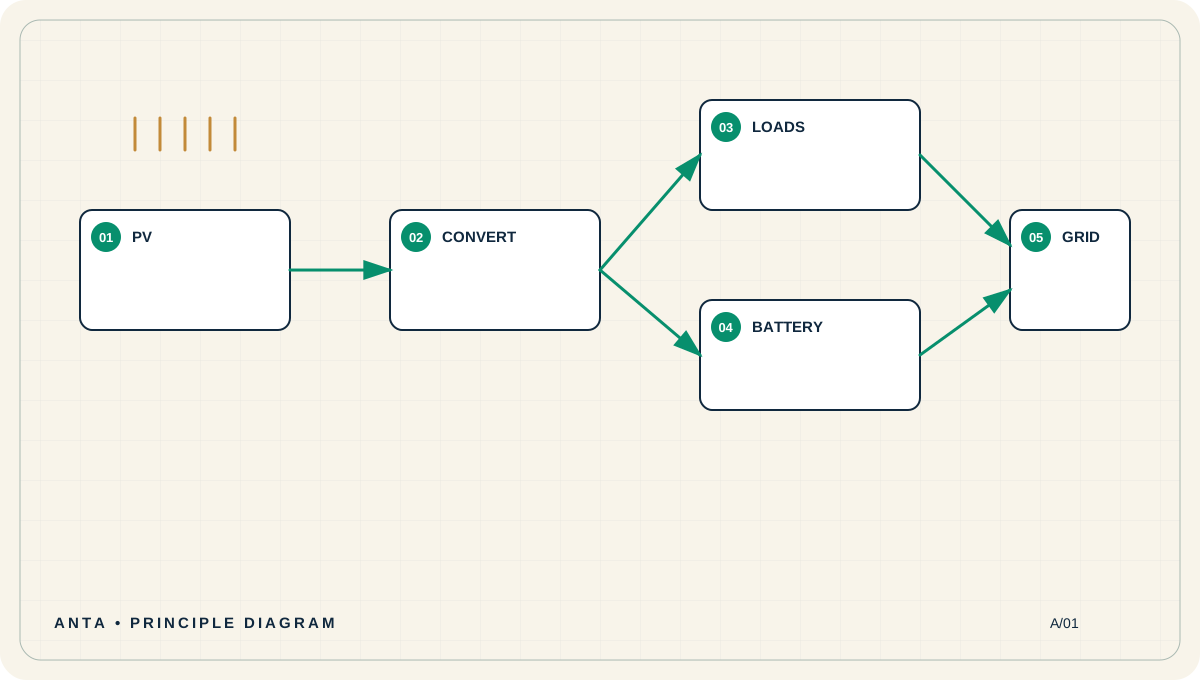
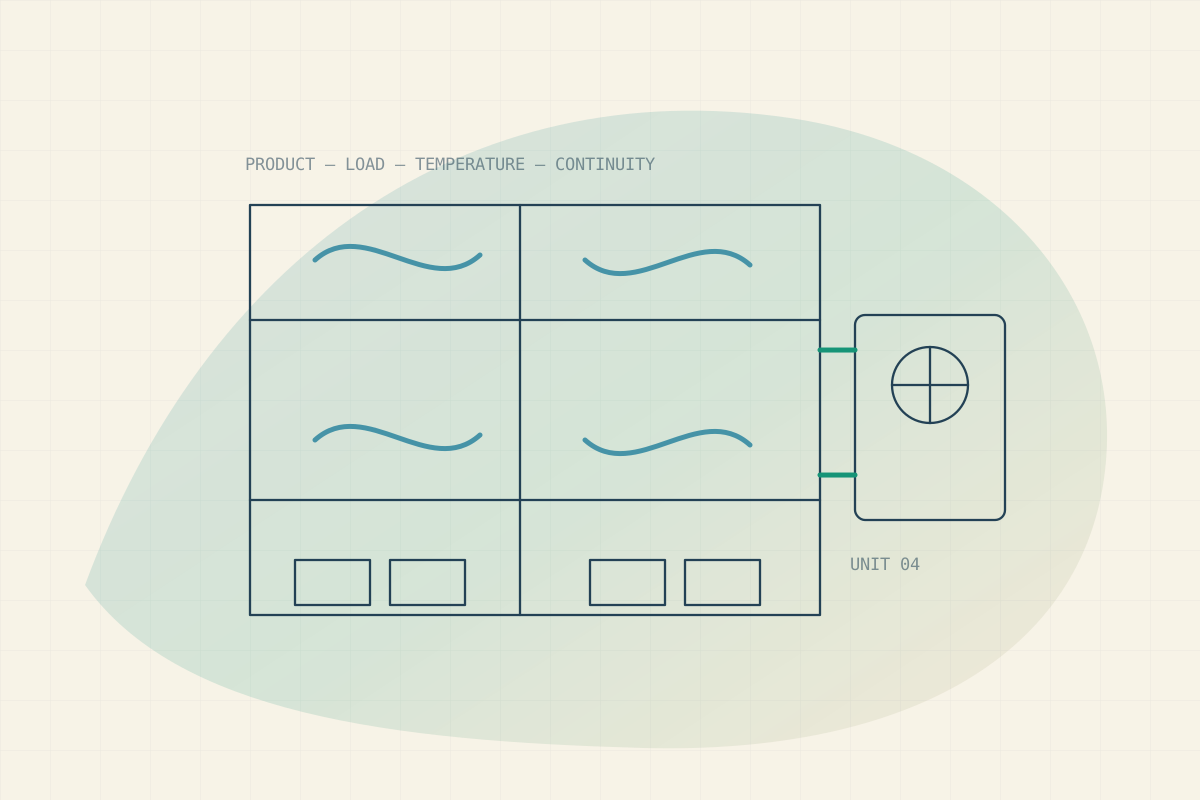
A renewable-energy system is an architecture of flows: resource, conversion, protection, grid, loads, storage, backup, monitoring and operating rules.
!
Diagrams explain a principle. Any application requires analysis of the site, use, climate, local rules and operating conditions.
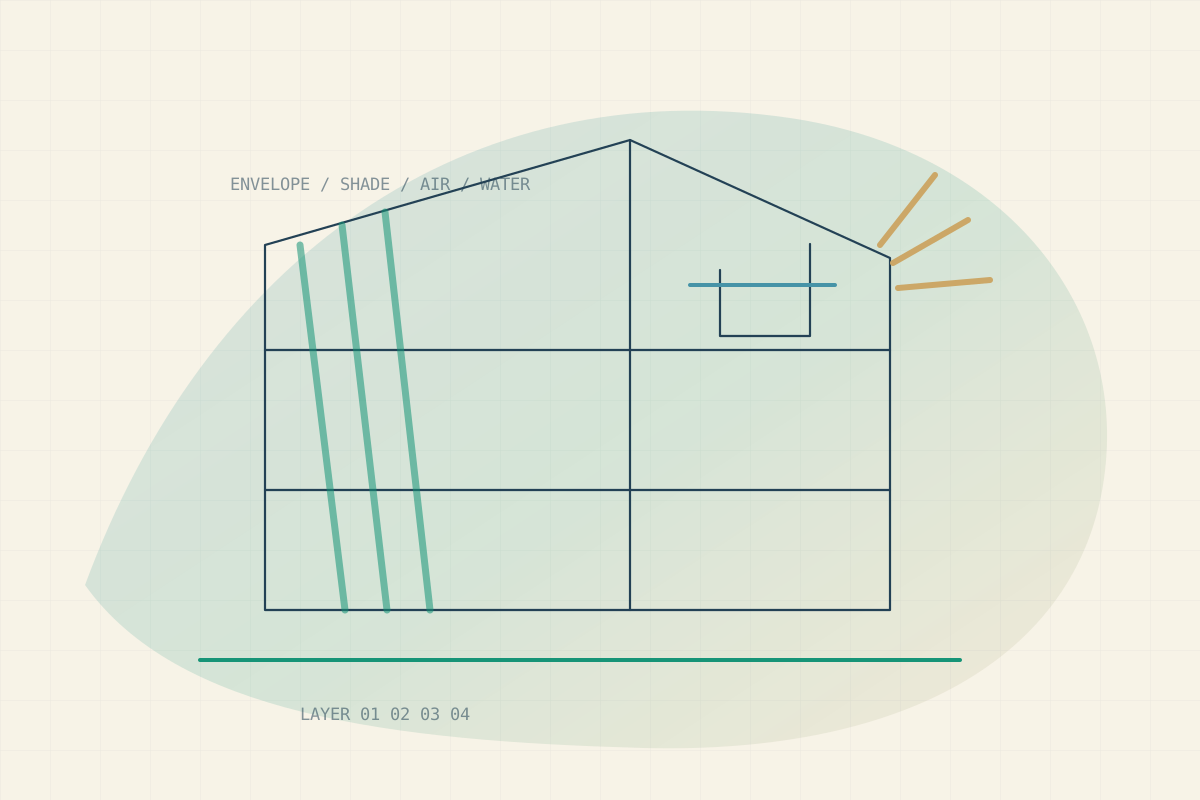
A/01Principle diagram — project-specific adaptation required
Understand how it works
From principle to technical decision.
Each stage shows what engineering must observe, calculate, coordinate or verify.
Describe the loads
Establish consumption, schedules, peaks, seasonality and criticality. The load profile comes before sizing.
Characterise the resource
Use location-appropriate weather data and assess orientation, tilt, shading, temperature, dust, wind and salt exposure.
Select the architecture
Compare self-consumption, export, hybrid operation, partial autonomy, microgrid and targeted backup.
Define control logic
State when to supply, charge, discharge, shed, back up, recharge from grid or generator and raise alarms.
Design for life
Plan access, cleaning, ventilation, protections, spares, warranties, cybersecurity, maintenance and replacement.
Design principles
What truly changes project quality.
Use before capacity
More panels do not fix a poorly understood demand profile.
Energy and power
Battery energy capacity and instantaneous power answer different questions.
Load priorities
Backup must distinguish vital, priority, deferrable and shed-able loads.
Continuous measurement
Monitoring should reveal generation, consumption, state of charge, alarms and drift.
Decision support
The right questions before selecting.
These answers provide direction. They do not replace surveys, sizing or site validation.
Is a battery always required?
No. It should meet a defined purpose such as continuity, time shifting, peak limitation or autonomy.
Does solar work during a grid outage?
A conventional grid-tied system may stop for safety. Maintaining selected loads requires a designed backup architecture and often storage.
Can annual output be predicted from kWp alone?
No. Location, orientation, shading, temperature, system losses, availability and operation all matter.
Learning caseIllustration — not a client reference
Learning case — shop exposed to outages
The shop needs lighting, till, communications and refrigeration during outages.
- Measure power and duration
- Classify load criticality
- Define a shedding sequence
- Compare battery, PV-battery and hybrid generator options
- Test transfer and actual autonomy
Useful autonomy comes from load selection and operating strategy, not from choosing a battery in isolation.
Frequently asked questions
Clear answers without oversimplifying.
01How many panels are needed?
Consumption, schedules, area, shading, climate, objectives and architecture are required.
02How long will a battery last?
Technology, temperature, depth and number of cycles, power, BMS and operation determine life.
03Does cleaning matter?
Yes. Dust, salt or organic deposits reduce output and can create hot spots.
04Can PV, grid and generator be combined?
Yes, with defined priorities, interlocks, protection, control and ownership of commands.
05How is performance checked?
Separate metering, availability indicators, tests and comparison of measured and weather-adjusted expected output.
Essential glossary
Use the right words for the right decisions.
- kWp
- Nominal PV generator power under reference conditions.
- Self-consumption
- Share of generated electricity used on site.
- Autonomy
- Defined duration or share of needs supplied without an external source.
- BMS
- Battery management and protection system.
- EMS
- Energy management system controlling priorities.
Further reading
Institutional and technical sources.
ANTA content is an original synthesis. These references support verification and further study.
Assignment method
From observation to performance evidence.
Every stage produces a decision, document or control useful to the next.
Characterise loads and critical uses
Assess resources and site constraints
Define operating priorities
Compare generation, storage and backup scenarios
Design electrical architecture and protection
Specify monitoring and acceptance tests
Verify performance and prepare maintenance
Deliverables
Documents designed to decide, procure, control and operate.
The deliverable organises assumptions, interfaces, responsibilities and evidence.
Energy baseline and load profile
Resource and site assessment
Scenario and autonomy comparison
Single-line diagrams and protection principles
Equipment and monitoring specifications
Economic and lifecycle analysis
Testing, commissioning and maintenance plan
ANTA perspective
A clear technical position.
Capacity is not selected in isolation. Uses, schedules, criticality, grid quality, ageing and operating strategy define the system.
Interfaces
No lasting performance is designed in isolation.
Disciplines are connected to control transfers of load, energy, water, air, data and responsibility.
Turn a subject into a project