01 — Vision and framing
Objectives, uses, success criteria, scope boundaries, stakeholders and launch decision.

ANTA structures the project from the initial need through operations: governance, responsibilities, data, options, cost, programme, risk, quality, testing and lessons learned.

ANTA management system
The client should always know what has been decided, what remains open, who acts, when evidence is due and which risk threatens the objective.
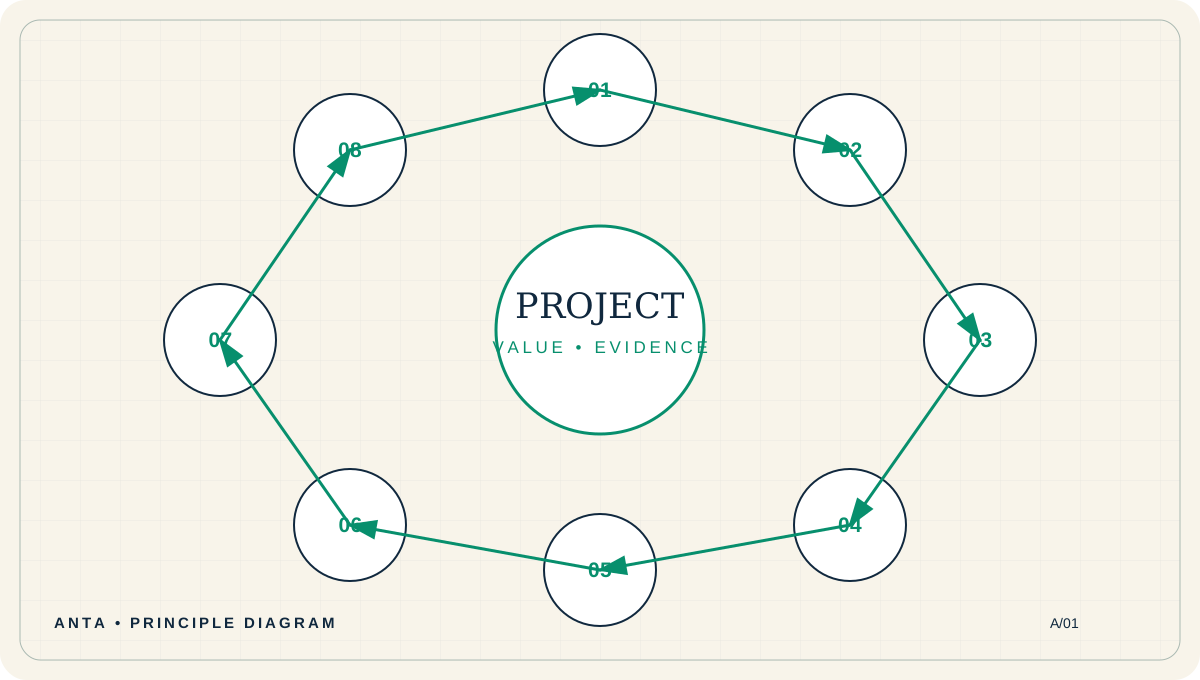
Operational cycle
The method scales to project size while preserving clear roles, risks and approvals.
Objectives, uses, success criteria, scope boundaries, stakeholders and launch decision.
Roles, RACI, approval routes, meeting rhythm, document control and escalation rules.
Collection plan, data quality, surveys, measurements, constraints, baseline and assumptions.
Comparable options, whole-life cost, risk, programme, operations, multicriteria assessment and documented selection.
Drawings, calculations, interfaces, reviews, cross-checks, buildability, maintainability and decision freeze.
Tender package, questions, bid analysis, clarifications, allocation of responsibilities and evidence requirements.
Programme, quality, reviews, inspections, deviations, change requests, decisions and traceability.
Commissioning, training, handover records, snags, initial performance, review and continuous improvement.
Toolkit
Purpose, scope, governance, success criteria and boundaries.
Who is responsible, accountable, consulted and informed.
Decision, options, reasons, owner, date, consequences and actions.
Cause, event, consequence, likelihood, impact, owner and response.
Dates for decisions and deliverables, not only a task list.
Boundaries between disciplines, equipment, data and contracts.
Useful indicators for cost, time, quality, risk, decisions and actions.
Functions, scenarios, criteria, instruments, evidence and responsibilities.
Design principles
Listen, restate the need and make achieved outcomes visible.
Avoid both premature freezing and unmanaged drift of critical choices.
Expose uncertainty, deviation and risk before they become surprises.
Every project improves standards, checklists and future design.
Frequently asked questions
Poorly designed management can. Proportionate management prevents rework, implicit decisions, missed interfaces and missing evidence.
The client decides within the agreed governance; engineering prepares options, explains consequences and raises warnings.
Describe the need, assess cost, time, performance, risk and interfaces, then approve before implementation.
To confirm that conditions are met before committing to the next phase or an irreversible cost.
Through agreed criteria: understanding, objectives, deliverable quality, deviation management, performance and ease of operation.
Further reading
ANTA content is an original synthesis. These references support verification and further study.
Turn a subject into a project