
08Engineering & Infrastructure
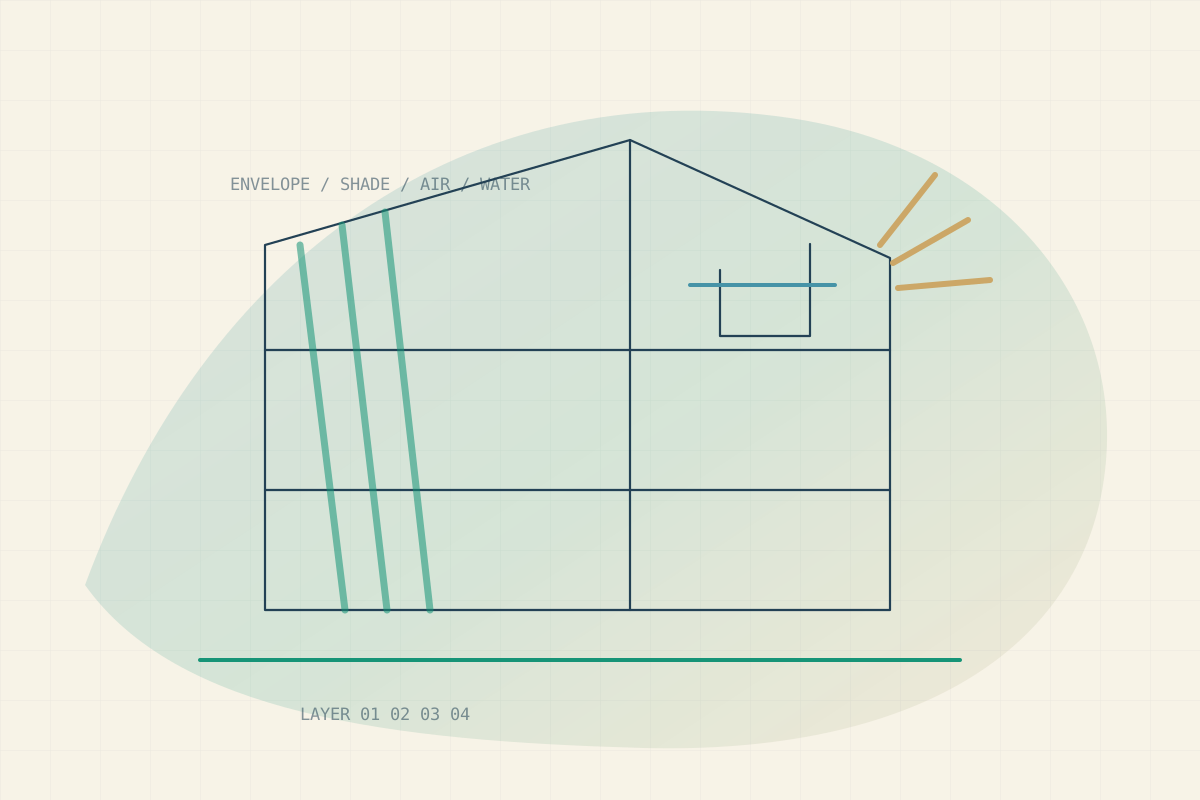
Make the envelope the building’s first energy system.
ANTA treats roofs, walls, openings, airtightness and solar protection as one system serving comfort, durability and lower demand.
A/01
Design principle
Data • Interfaces • Evidence
Common situations
Signals that justify a study.
- 01Overheating despite air conditioning
- 02Hot surfaces, leakage and condensation
- 03Insulation unsuited to climate or use
- 04Thermal bridges and workmanship defects
- 05Fragmented refurbishment without a whole-building view
Scope of services
Assignments proportionate to the real need.
External insulation and opaque elements
Acoustic insulation and indoor comfort
Windows, glazing and airtightness
Solar protection and bioclimatic design
Roofs, façades and energy refurbishment
ANTA technical resource
See the system, not only the equipment.
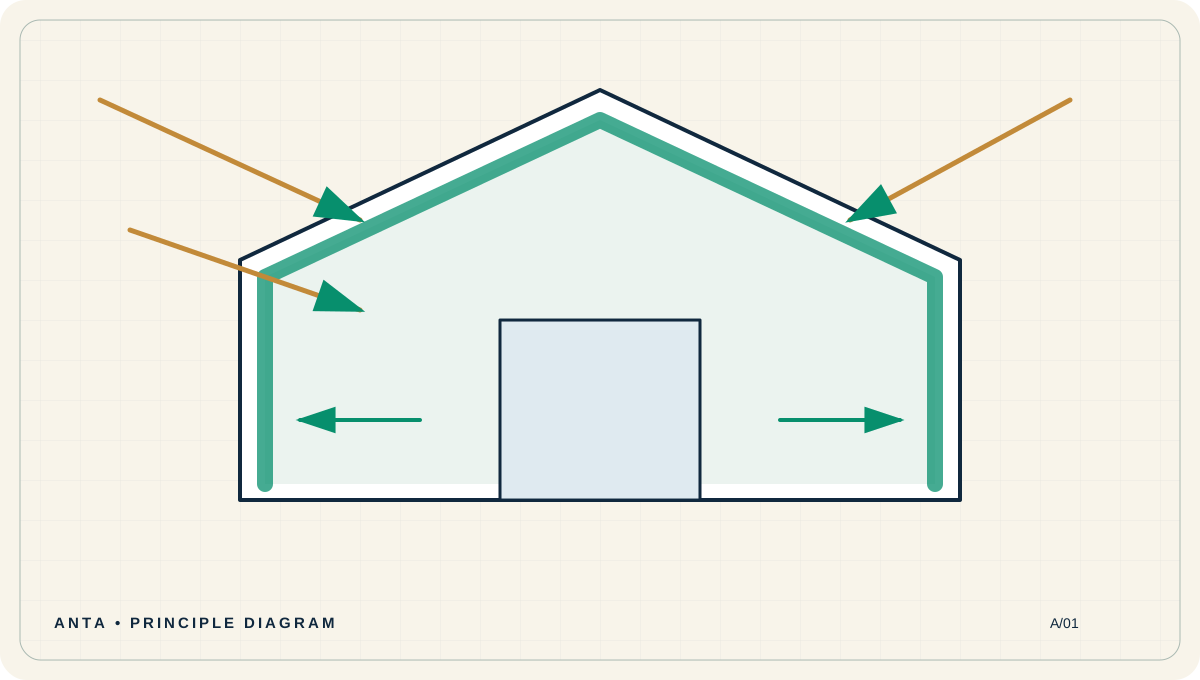
The envelope is the building’s first energy system. It filters sun, heat, air, water, noise and light before mechanical systems act.
!
Diagrams explain a principle. Any application requires analysis of the site, use, climate, local rules and operating conditions.
A/01Principle diagram — project-specific adaptation required
Understand how it works
From principle to technical decision.
Each stage shows what engineering must observe, calculate, coordinate or verify.
Read climate and site
Orientation, sun path, wind, humidity, rain, dust, vegetation and outdoor uses guide design.
Identify flows
Roof, walls, glazing, thermal bridges, infiltration and internal gains explain discomfort and demand.
Prioritise passive protection
Shading, reflectance, insulation, thermal mass, night ventilation, controlled airtightness and layout reduce loads.
Coordinate systems
Envelope choices change cooling capacity, air quality, condensation, acoustics and lighting.
Verify details
Junctions, upstands, fixings, layer continuity, drainage and workmanship govern durability.
Design principles
What truly changes project quality.
Comfort beyond air temperature
Surface radiation, humidity, air speed and clothing affect sensation.
Stop sun outside
External shading usually intercepts radiation before it passes through glass.
Continuity
A high-performing layer interrupted by bridges or gaps loses effectiveness.
Climate adaptation
A copied solution may create new defects if climate is ignored.
Decision support
The right questions before selecting.
These answers provide direction. They do not replace surveys, sizing or site validation.
Is insulation useful in a hot climate?
It can reduce gains, especially through roofs, but should be combined with shading, ventilation and moisture control.
Why is a room hot after sunset?
Building mass may have stored heat and releases it later; a hot roof and no night ventilation can worsen the delay.
Are new windows enough?
Not necessarily. Orientation, shading, airtightness, ventilation, walls, roof and uses should be assessed together.
Learning caseIllustration — not a client reference
Learning case — west-facing offices
Cooling runs hard in the afternoon and occupants close internal blinds.
- Map solar exposure
- Measure surface and air temperatures
- Compare external shading, glass and insulation
- Recalculate load after reducing gains
- Adjust controls and schedules
Stopping radiation before the glazing may avoid increasing mechanical capacity.
Frequently asked questions
Clear answers without oversimplifying.
01What is a thermal bridge?
A location where geometry or material continuity increases heat flow.
02Does airtightness prevent a building from breathing?
It limits uncontrolled leakage; planned ventilation provides the required air renewal.
03Why manage humidity?
It affects comfort, condensation, mould, durability and cooling load.
04Is a reflective roof always enough?
It may reduce absorption, but insulation, waterproofing, details and ageing still matter.
05How is comfort verified?
With air and surface temperatures, humidity, air speed and observations of use and complaints.
Essential glossary
Use the right words for the right decisions.
- Thermal mass
- Ability to store and later release heat.
- Albedo
- Share of solar radiation reflected by a surface.
- Thermal bridge
- Discontinuity that locally increases transfer.
- Airtightness
- Control of unwanted air paths.
- Summer comfort
- Ability to limit overheating and discomfort in hot periods.
Further reading
Institutional and technical sources.
ANTA content is an original synthesis. These references support verification and further study.
Assignment method
From observation to performance evidence.
Every stage produces a decision, document or control useful to the next.
Observe the asset and its uses
Analyse sun, wind, moisture and heat transfer
Identify defects and interfaces
Compare solutions by climate and lifecycle cost
Treat continuity, fixings, water and fire
Define details and site controls
Verify comfort after works
Deliverables
Documents designed to decide, procure, control and operate.
The deliverable organises assumptions, interfaces, responsibilities and evidence.
Defect mapping and diagnosis
Thermal simulation and comfort analysis
Prioritised refurbishment scenarios
Principle drawings and construction details
Specifications and workmanship requirements
Inspection and hold-point plan
Care and durability guide
ANTA perspective
A clear technical position.
A high-performance envelope lowers demand, improves passive comfort and enables more accurate sizing of technical systems.
Interfaces
No lasting performance is designed in isolation.
Disciplines are connected to control transfers of load, energy, water, air, data and responsibility.
Turn a subject into a project