
06Engineering & Infrastructure
Balance comfort, indoor air quality, efficiency and operability.
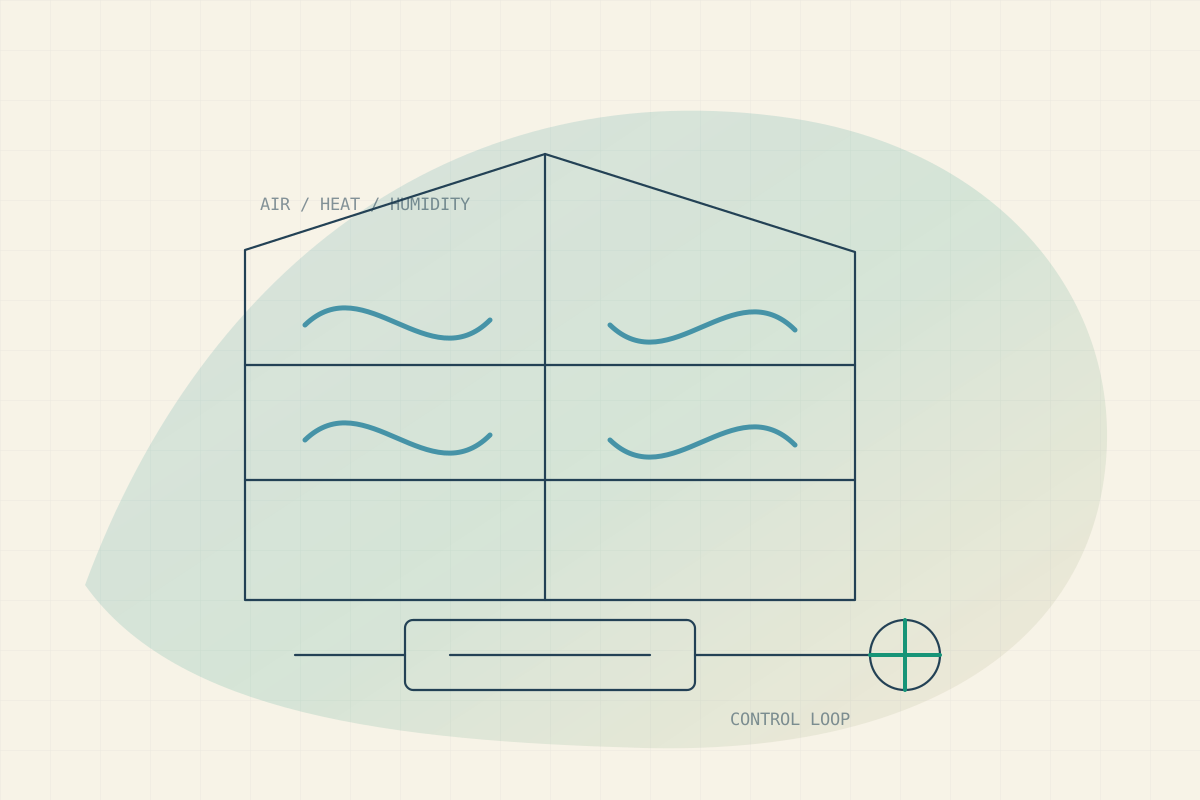
ANTA designs and optimises heating, ventilation, cooling and air-treatment systems by connecting uses, loads, envelope, humidity and controls.
A/01
Design principle
Data • Interfaces • Evidence
Common situations
Signals that justify a study.
- 01Spaces that remain hot, humid or poorly ventilated
- 02High consumption and unstable controls
- 03Poor indoor air quality or pressure balance
- 04Oversized systems that cycle and age prematurely
- 05Operation too complex for local teams
Scope of services
Assignments proportionate to the real need.
Heating, cooling and ventilation design
Air-handling units and indoor air quality
Heat pumps and low-temperature systems
Heat recovery, hot water and controls
Audit, balancing and optimisation
ANTA technical resource
See the system, not only the equipment.
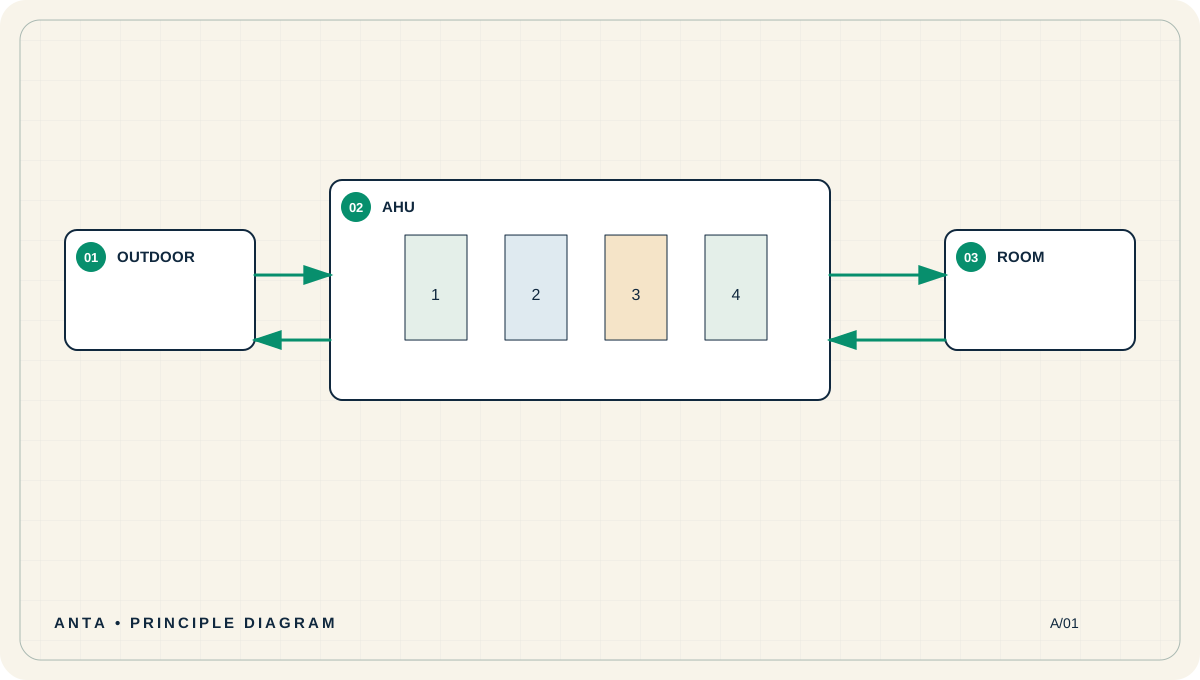
Cooling, ventilation and air treatment are connected but distinct functions. Performance comes from coordinating them with the envelope, occupancy, humidity and controls.
!
Diagrams explain a principle. Any application requires analysis of the site, use, climate, local rules and operating conditions.
A/01Principle diagram — project-specific adaptation required
Understand how it works
From principle to technical decision.
Each stage shows what engineering must observe, calculate, coordinate or verify.
Define required conditions
Temperature, humidity, air quality, pressure, noise and schedules differ by office, healthcare, hotel, industry or storage use.
Calculate loads
Solar gains, people, equipment, outdoor air, infiltration, envelope and process determine the real requirement.
Organise air paths
Define intake, filtration, treatment, supply, transfer, return, extract and discharge while avoiding unwanted recirculation.
Select and control
Compare central or local solutions, recovery, variable speed, zoning, setpoints and operating sequences.
Maintain quality
Plan access, filters, cleaning, condensate drainage, testing, balancing and alarm follow-up.
Design principles
What truly changes project quality.
Cooling is not ventilation
An air conditioner may recirculate room air without providing hygienic outdoor air.
Humidity matters
Comfort and condensation risk depend on humidity as well as temperature.
Distribution matters
An efficient machine cannot overcome badly balanced networks or poorly placed diffusers.
Envelope first
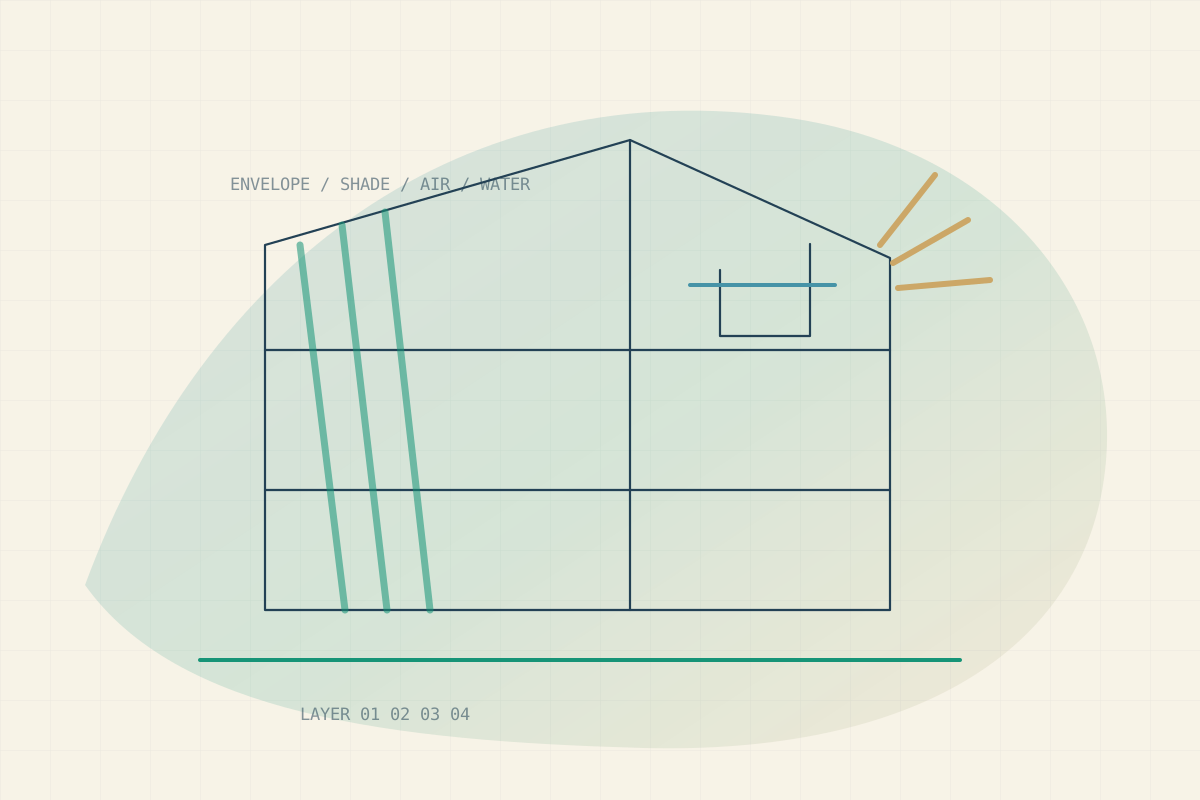
Shading and controlled airtightness reduce loads before plant.
Decision support
The right questions before selecting.
These answers provide direction. They do not replace surveys, sizing or site validation.
Why is a room uncomfortable despite a large air conditioner?
Capacity may not solve solar gains, poor air distribution, humidity, infiltration, short cycling or a badly located thermostat.
Should windows be opened when cooling?
It depends on the ventilation strategy. Uncontrolled opening may add heat and humidity, while no outdoor air can harm air quality.
Why can an air-handling unit use so much energy?
Excess flow, dirty filters, pressure loss, schedules, coils, humidity, no heat recovery or weak controls may contribute.
Learning caseIllustration — not a client reference
Learning case — stuffy meeting room
Temperature appears acceptable, but occupants report fatigue and odours.
- Check occupancy and schedules
- Measure CO₂, temperature and humidity
- Check outdoor air and distribution
- Balance flow and control by occupancy
- Introduce filter maintenance
The issue was not only thermal; ventilation and air quality had to be addressed together.
Frequently asked questions
Clear answers without oversimplifying.
01What is the difference between ventilation and air conditioning?
Ventilation renews and transports air; air conditioning changes its thermal condition.
02Does CO₂ measure all air quality?
No. It is often a useful indicator of occupancy-related confinement, not every pollutant.
03Why do filters matter?
They protect people and equipment, while class, condition and pressure loss affect air quality and energy.
04How are draughts avoided?
Through diffuser selection, velocities, supply temperature, location and balancing.
05When should airflows be measured?
At commissioning, after modifications, when discomfort occurs and during planned balancing checks.
Essential glossary
Use the right words for the right decisions.
- AHU
- Air-handling unit.
- Outdoor air
- Air introduced from outside for renewal.
- Return air
- Air removed from a space for discharge or partial recirculation.
- Pressure loss
- Resistance to airflow through filters, ducts and components.
- Zoning
- Division into areas with distinct needs or schedules.
Further reading
Institutional and technical sources.
ANTA content is an original synthesis. These references support verification and further study.
Assignment method
From observation to performance evidence.
Every stage produces a decision, document or control useful to the next.
Define uses and comfort levels
Assess envelope, gains and ventilation
Calculate loads and flows
Compare architectures and energy sources
Design zoning, controls and safety
Specify testing and balancing
Optimise in operation
Deliverables
Documents designed to decide, procure, control and operate.
The deliverable organises assumptions, interfaces, responsibilities and evidence.
Load and airflow calculations
Functional principles and diagrams
Layouts and equipment specifications
Control sequences and BMS points
Acoustic and indoor-air requirements
Testing and balancing procedures
Operating and maintenance guidance
ANTA perspective
A clear technical position.
Comfort is not only temperature. It also depends on air, humidity, velocity, solar gains, noise and the operator’s ability to control the system.
Interfaces
No lasting performance is designed in isolation.
Disciplines are connected to control transfers of load, energy, water, air, data and responsibility.
Turn a subject into a project