
12Engineering & Infrastructure
Protect availability and performance after handover.
ANTA structures maintenance and operation around criticality, measurement, alarms, skills, spares and traceability.
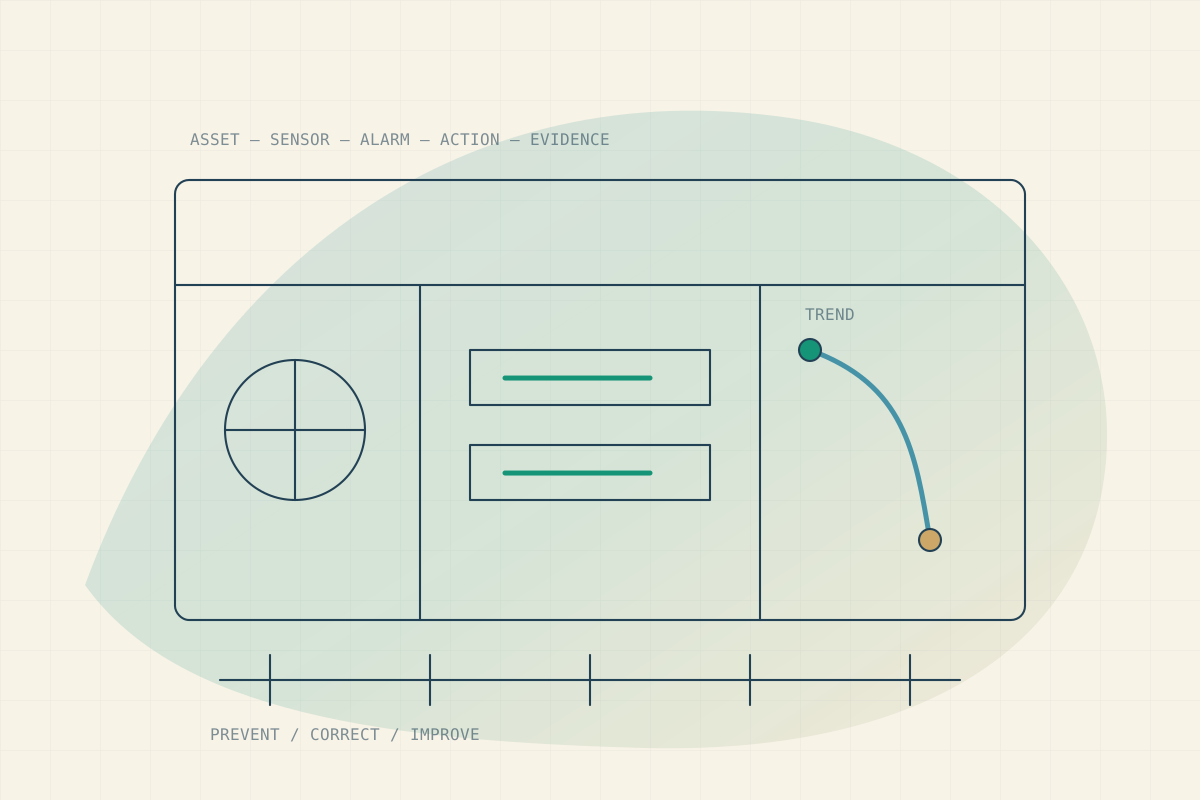
A/01
Design principle
Data • Interfaces • Evidence
Common situations
Signals that justify a study.
- 01Assets handed over without an operating strategy
- 02Repeated failures and corrective-only maintenance
- 03Many alarms but no prioritisation
- 04Consumption and control drift
- 05Dependence on a supplier without documentation or reversibility
Scope of services
Assignments proportionate to the real need.
Preventive and corrective maintenance plans
Monitoring, remote supervision and alarm management
Consumption and performance tracking
Operating support and controls optimisation
Training, documentation, critical spares and reversibility
ANTA technical resource
See the system, not only the equipment.
Performance is not a condition achieved on acceptance day. It is the ability to detect, decide, intervene, verify and learn throughout the system life.
!
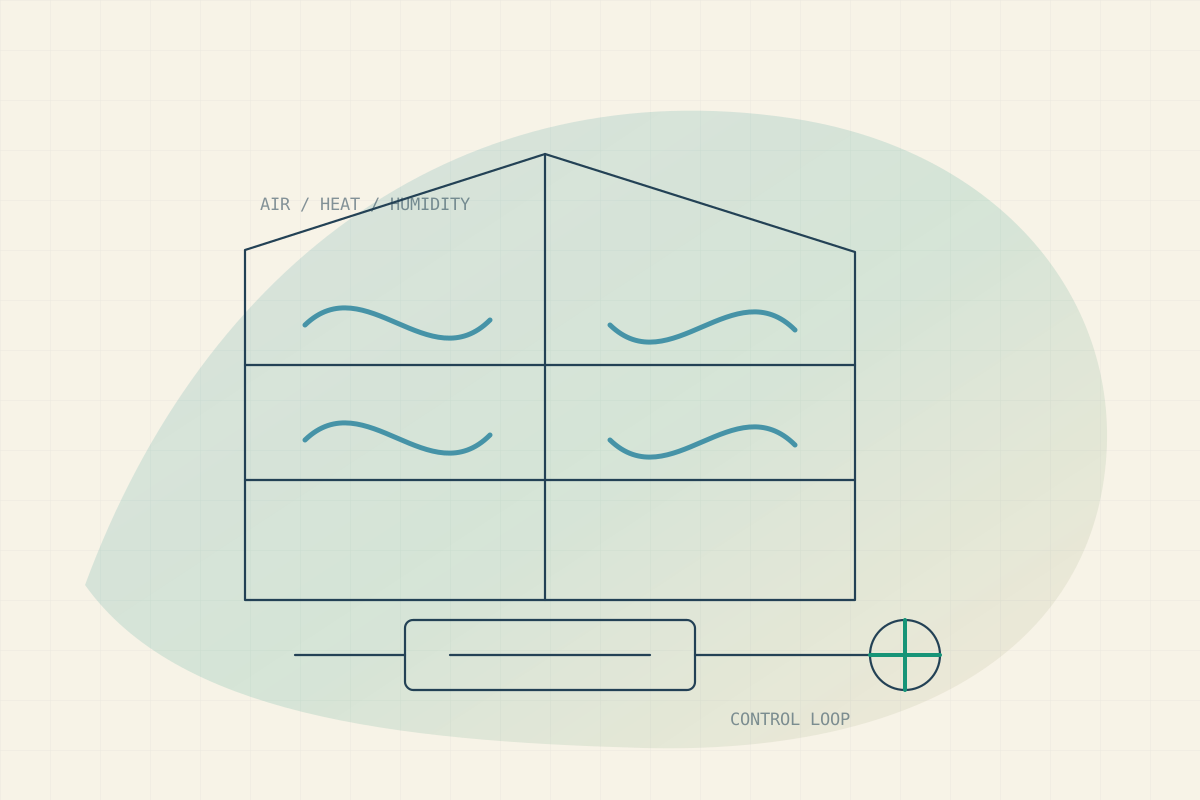
Diagrams explain a principle. Any application requires analysis of the site, use, climate, local rules and operating conditions.
A/01Principle diagram — project-specific adaptation required
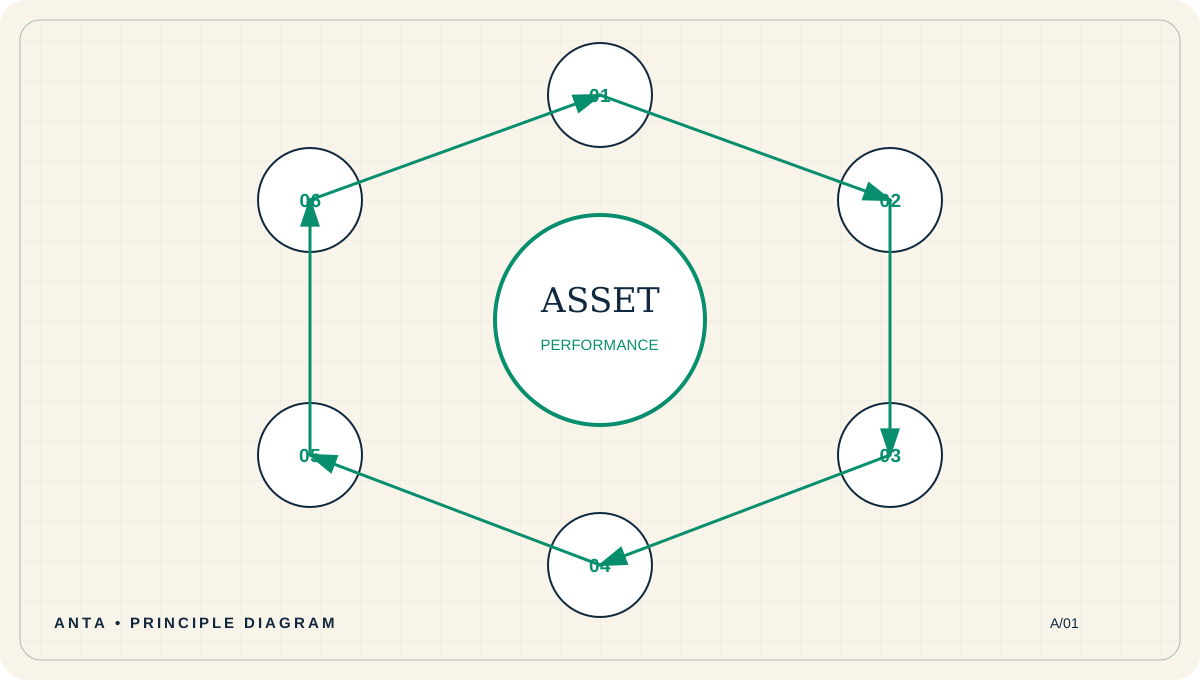
Understand how it works
From principle to technical decision.
Each stage shows what engineering must observe, calculate, coordinate or verify.
Define critical functions
Identify what must remain available, the consequence of failure and acceptable restoration time.
Build the maintenance plan
List assets, tasks, frequencies, skills, tools, spares, isolation and evidence.
Monitor usefully
Select reliable data: states, temperatures, powers, pressures, consumption, alarms and trends.
Manage deviations
Qualify urgency, cause, temporary action, repair, validation and lesson learned.
Improve
Analyse failures, cost, availability and drift to adjust settings, stock, training and design.
Design principles
What truly changes project quality.
Targeted prevention
Maintain according to criticality and failure modes rather than performing low-value routine work.
Reliable data
A drifting sensor can lead automation and people to wrong decisions.
Actionable alarm
Each alarm needs priority, recipient, response time, procedure and acknowledgement.
Learning loop
Repeated faults should change the maintenance plan or design standard.
Decision support
The right questions before selecting.
These answers provide direction. They do not replace surveys, sizing or site validation.
Should everything be monitored?
No. Monitor what explains function, detects drift or enables action. Excess data without governance creates noise.
Preventive or predictive?
Preventive work follows a plan; predictive work uses indicator trends to anticipate failure.
Why does performance degrade?
Fouling, sensor drift, changing use, altered settings, wear, unresolved defects or lost competence may contribute.
Learning caseIllustration — not a client reference
Learning case — multi-site portfolio
Several stores show different bills and failures despite similar equipment.
- Create a common asset register
- Define normalised indicators
- Compare consumption and availability
- Find recurring drift and causes
- Standardise interventions, spares and lessons learned
Maintenance becomes a source of knowledge and standardisation, not only a reaction to breakdowns.
Frequently asked questions
Clear answers without oversimplifying.
01What belongs in an asset register?
Identifier, location, function, manufacturer, model, date, warranty, documents, criticality, history and spares.
02How should alarms be prioritised?
By consequence for safety, service, product, energy, environment and time before damage.
03Is a maintenance contract needed?
It depends on complexity and internal resources. Scope, response, evidence, exclusions and KPIs should be clear.
04How is availability measured?
Define period, expected function, downtime, exclusions and calculation method.
05Why review performance after acceptance?
To verify settings under real conditions, close gaps and complete training.
Essential glossary
Use the right words for the right decisions.
- CMMS
- Computerised maintenance management system.
- Criticality
- Combination of failure likelihood and consequence.
- Availability
- Share of time a required function can be delivered.
- Drift
- Progressive departure from expected operation.
- Acknowledgement
- Confirmation that an alarm has been seen and taken in charge.
Further reading
Institutional and technical sources.
ANTA content is an original synthesis. These references support verification and further study.
Assignment method
From observation to performance evidence.
Every stage produces a decision, document or control useful to the next.
List equipment and critical functions
Define service levels and responsibilities
Build task schedules and frequencies
Configure data, alarms and escalation
Organise spares, contracts and skills
Analyse drift and corrective action
Update records and improvement plans
Deliverables
Documents designed to decide, procure, control and operate.
The deliverable organises assumptions, interfaces, responsibilities and evidence.
Asset register and criticality matrix
Maintenance plan and task schedules
Alarm, role and escalation matrix
Dashboards and periodic reports
Operating file and procedures
Training and critical-spares plan
Continuous-improvement register
ANTA perspective
A clear technical position.
Performance lasts only when it is measured, understood, maintained and transferred to the people who operate the system.
Interfaces
No lasting performance is designed in isolation.
Disciplines are connected to control transfers of load, energy, water, air, data and responsibility.
Turn a subject into a project