
03Engineering & Infrastructure
Turn a need into a reliable decision and an actionable technical brief.
ANTA converts uses, constraints and objectives into studies, scenarios, specifications, procurement documents and verifiable acceptance criteria.
A/01
Design principle
Data • Interfaces • Evidence
Common situations
Signals that justify a study.
- 01Unclear need or fragmented specifications
- 02Insufficient or unreliable baseline data
- 03Options compared on price rather than whole-life value
- 04Tender documents that do not make bids comparable
- 05Handover without evidence or operating preparation
Scope of services
Assignments proportionate to the real need.
Feasibility, programming, concept and detailed design
Calculations, simulations and technical-economic scenarios
Owner’s advisory and project management support
Tender documents and bid evaluation
Inspection, commissioning, handover and performance monitoring
ANTA technical resource
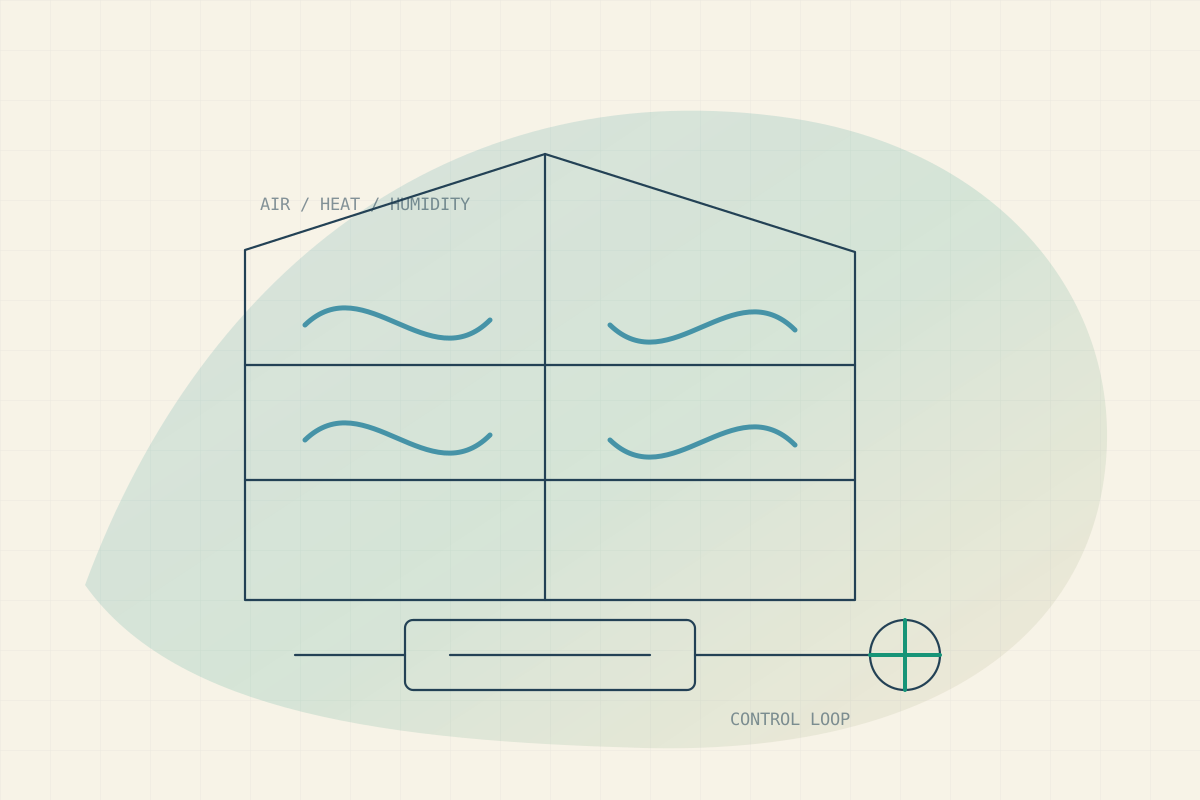
See the system, not only the equipment.
A sound study does not begin by selecting equipment. It turns an often incomplete intention into a sequence of documented, comparable and verifiable decisions.
!
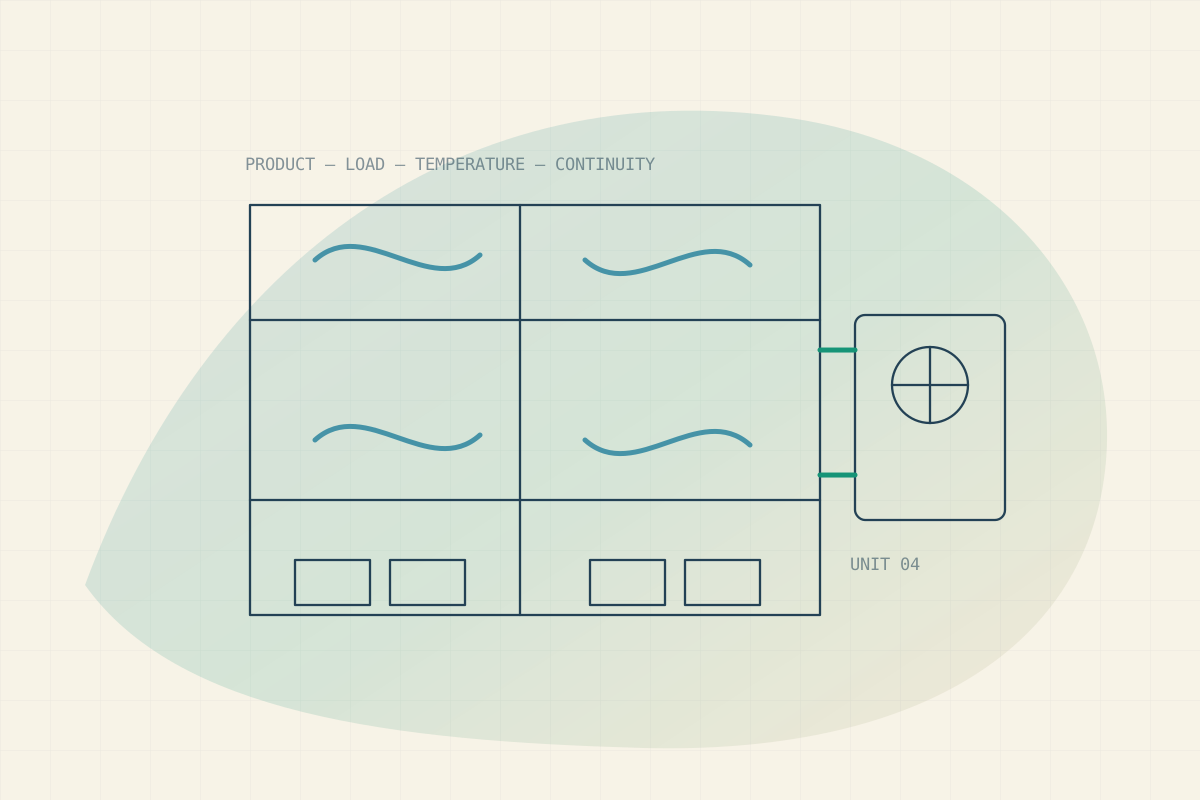
Diagrams explain a principle. Any application requires analysis of the site, use, climate, local rules and operating conditions.
A/01Principle diagram — project-specific adaptation required
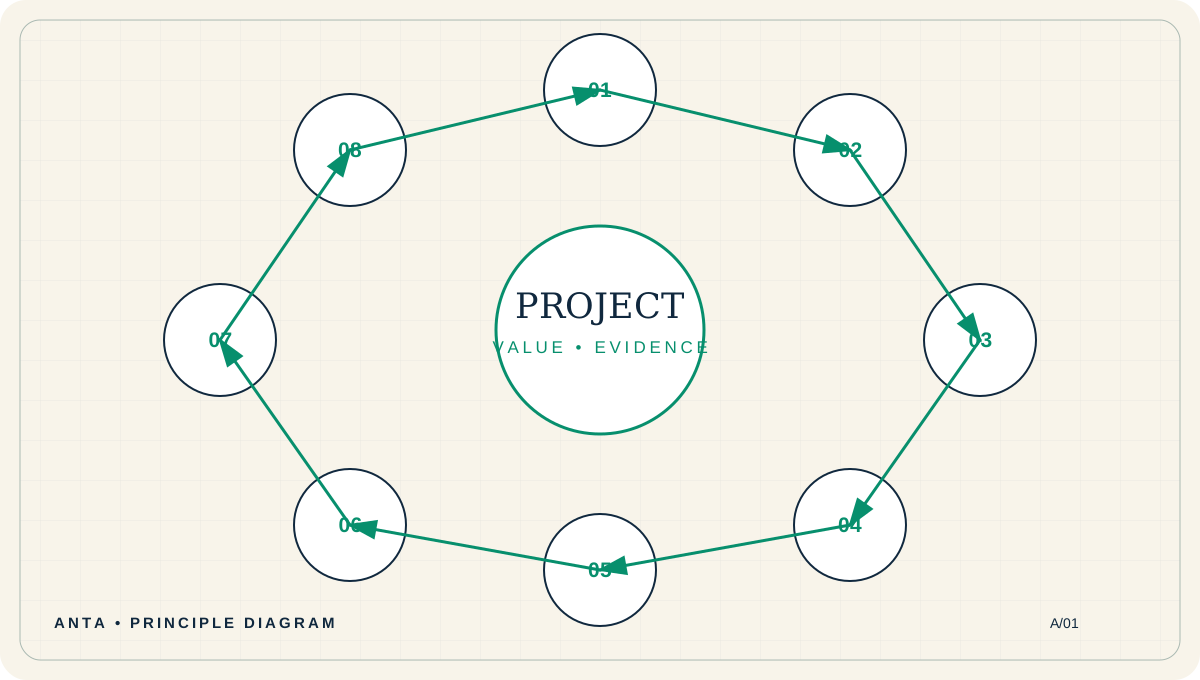
Understand how it works
From principle to technical decision.
Each stage shows what engineering must observe, calculate, coordinate or verify.
Frame the purpose
Define the service required, uses, beneficiaries, constraints and success criteria. The functional need becomes the shared project reference.
Build the baseline
Gather drawings, bills, readings, failure history, operating conditions and site observations. Label every item as measured, declared, estimated or to be confirmed.
Compare options
Describe coherent architectures with assumptions, interfaces, performance, risk, capital cost and operating cost.
Specify unambiguously
Turn the selected option into drawings, diagrams, minimum performance, installation requirements, tests, records and responsibilities.
Verify reality
Review detailed design, installation, settings, testing, training, snags and early operating data.
Design principles
What truly changes project quality.
Traceability
A significant decision must be linked to data, an assumption, an owner and an approval.
Proportionality
The depth of study must reflect risk, investment and irreversibility.
Whole-life cost
Purchase price alone ignores energy, maintenance, consumables, downtime, replacement and end of life.
Evidence
Every performance claim needs a measurement method and acceptance criterion.
Decision support
The right questions before selecting.
These answers provide direction. They do not replace surveys, sizing or site validation.
Should a project begin with an audit or a feasibility study?
An audit explains an existing condition. Feasibility compares whether and how a project can be delivered. They may follow one another or be partly combined.
Why compare several options?
A single early answer hides trade-offs. Options make cost, performance, resilience, programme, maintenance and adaptability explicit.
When should contractors be consulted?
Once the need, interfaces, expected performance and comparison rules are sufficiently stable to obtain genuinely comparable bids.
Learning caseIllustration — not a client reference
Learning case — energy refurbishment of a public building
The client wants “solar panels” to reduce a high bill.
- Reconstruct uses and schedules
- Identify drift and critical loads
- Compare sufficiency, envelope measures, controls and solar generation
- Define continuity priorities
- Prepare a programme and test criteria
Solar is not rejected; it is placed within a strategy that avoids generating energy to compensate for preventable waste.
Frequently asked questions
Clear answers without oversimplifying.
01Does a study guarantee results?
It reduces uncertainty, but execution, settings, operations and real conditions still matter. ANTA therefore links targets to tests and monitoring.
02Can incomplete data be used?
Yes, provided known, estimated and unverified information are clearly separated and the missing surveys are planned.
03What makes a good tender package?
A clear need, allocated interfaces, measurable performance, comparable responses and defined acceptance evidence.
04Why involve operators early?
Access, skills, consumables, alarms and procedures often determine real performance.
05Can ANTA follow delivery?
Yes, according to scope: reviews, inspections, meetings, change control, tests, acceptance and start-up support.
Essential glossary
Use the right words for the right decisions.
- Client adviser
- Independent support helping the client define, decide and control.
- Design management
- Coordination of design disciplines, decisions and interfaces.
- Tender package
- Documents issued to obtain comparable contractor proposals.
- Commissioning
- Organised verification of functions and performance.
- Assumption
- A stated provisional value or condition used to progress the study.
Further reading
Institutional and technical sources.
ANTA content is an original synthesis. These references support verification and further study.
Assignment method
From observation to performance evidence.
Every stage produces a decision, document or control useful to the next.
Clarify uses, objectives and responsibilities
Validate data and assumptions
Build and compare coherent scenarios
Define architecture, interfaces and risks
Produce verifiable drawings and specifications
Support procurement and delivery
Test, document and transfer to operations
Deliverables
Documents designed to decide, procure, control and operate.
The deliverable organises assumptions, interfaces, responsibilities and evidence.
Audit and prioritised diagnosis
Feasibility and decision report
Calculations, drawings and functional diagrams
Technical specifications and procurement documents
Technical-economic comparison
Inspection and testing plan
Handover and performance follow-up file
ANTA perspective
A clear technical position.
A useful study does more than describe a solution: it structures decisions, responsibilities, interfaces and evidence from the outset.
Interfaces
No lasting performance is designed in isolation.
Disciplines are connected to control transfers of load, energy, water, air, data and responsibility.
Turn a subject into a project