
05Engineering & Infrastructure
Reduce demand first. Improve efficiency. Decarbonise with evidence.
ANTA identifies avoidable demand, operational losses, recovery opportunities and the most relevant low-carbon solutions before adding capacity.
A/01
Design principle
Data • Interfaces • Evidence
Common situations
Signals that justify a study.
- 01Energy spend treated only through supply contracts
- 02Equipment added before demand is reduced
- 03Recovery opportunities not assessed
- 04Targets disconnected from investment reality
- 05Savings claimed without measurement
Scope of services
Assignments proportionate to the real need.
Demand reduction and operational optimisation
Heat recovery and process integration
Low-carbon refurbishment scenarios
Roadmaps and investment prioritisation
Measurement and verification plans
ANTA technical resource
See the system, not only the equipment.
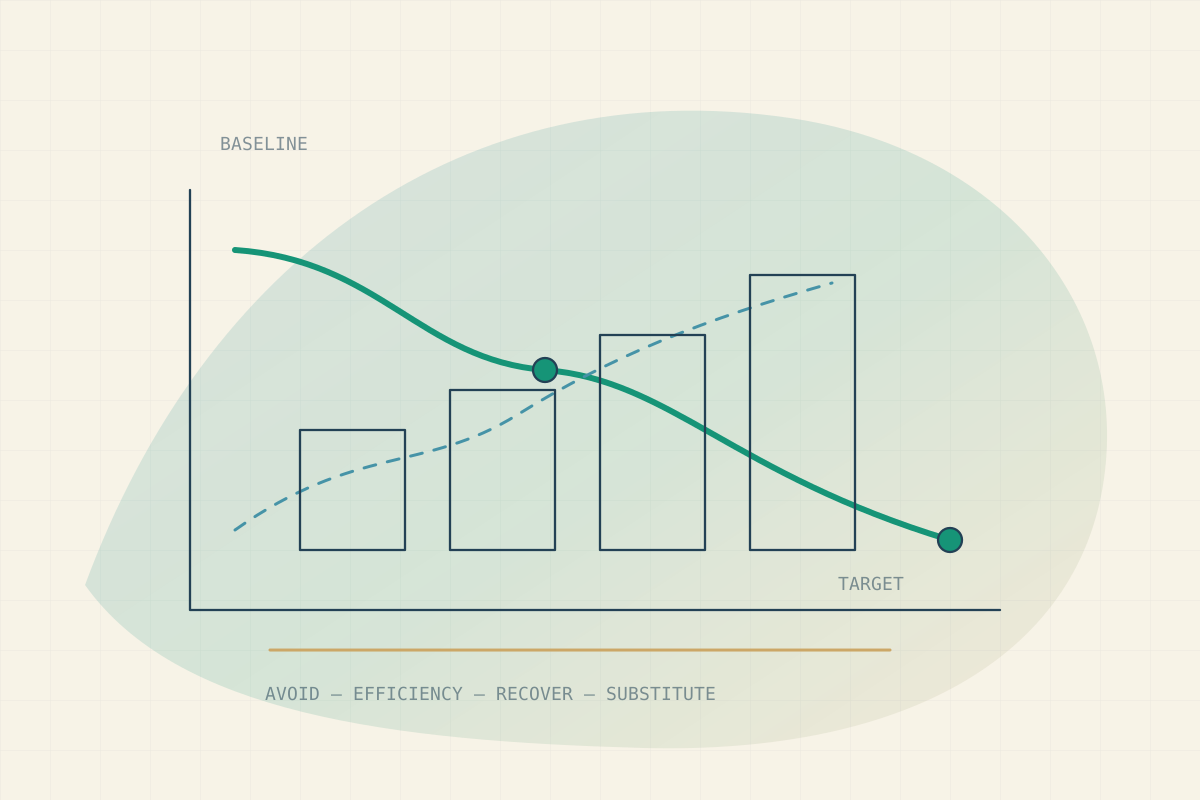
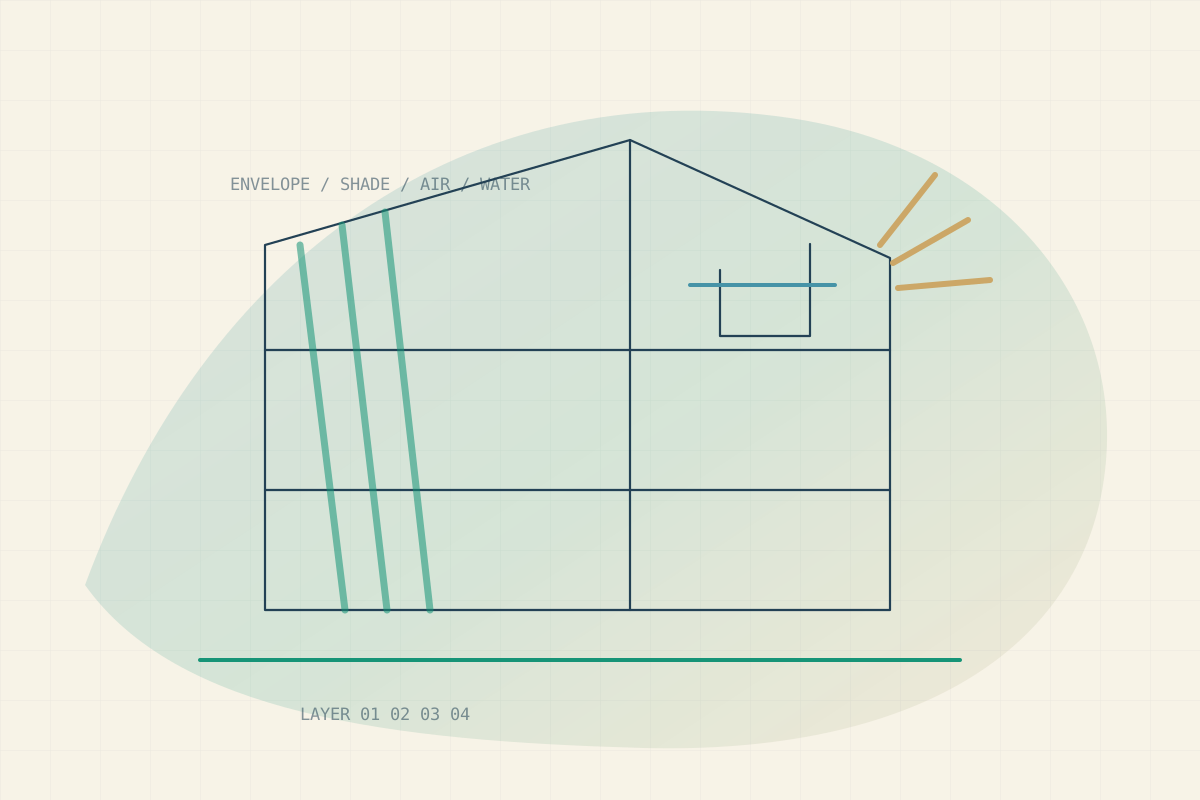
The first energy to control is the energy whose purpose has been understood. Sufficiency, efficiency and decarbonisation follow a sequence: avoid, reduce, recover, control, then substitute.
!
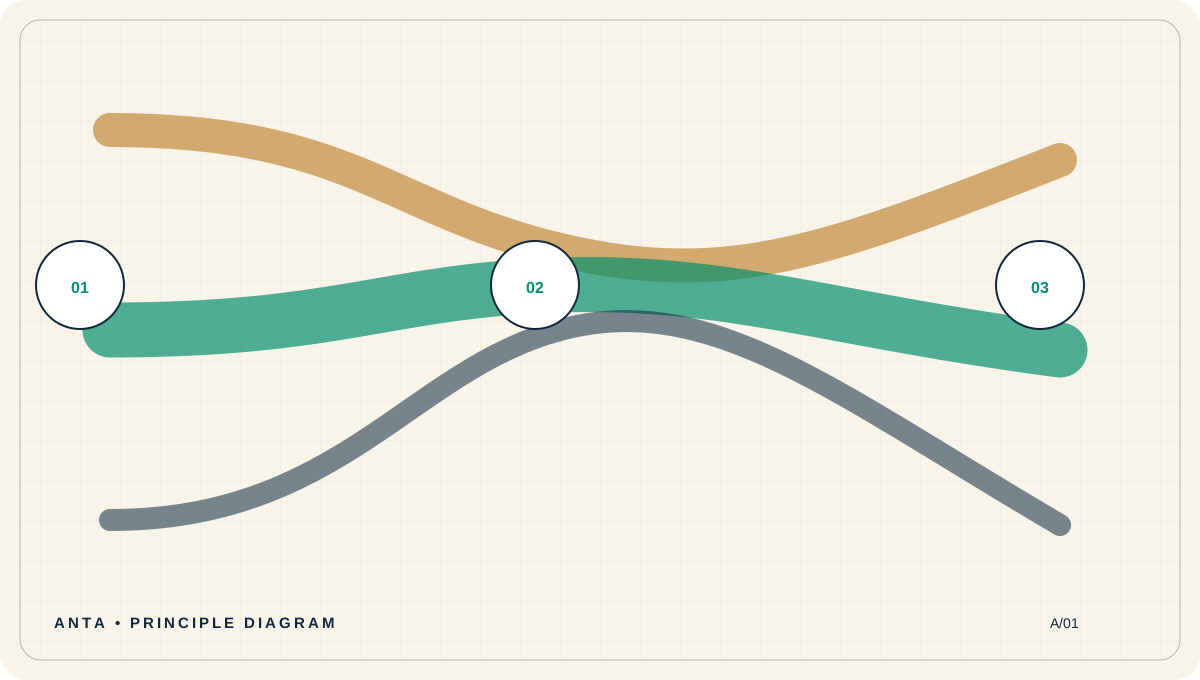
Diagrams explain a principle. Any application requires analysis of the site, use, climate, local rules and operating conditions.
A/01Principle diagram — project-specific adaptation required
Understand how it works
From principle to technical decision.
Each stage shows what engineering must observe, calculate, coordinate or verify.
Reconstruct consumption
Analyse bills, meters, schedules, temperatures, production and events to explain when and why energy is used.
Separate end uses
Ventilation, refrigeration, cooling, lighting, process, pumping and standby have different causes and levers.
Find avoidable losses
Out-of-hours operation, conflicting setpoints, leaks, fouling, oversizing, poor controls and a weak envelope.
Build an action plan
Rank actions by cost, saving, time, risk, dependency, life and measurability.
Measure after action
Define a baseline, adjust for weather or activity, monitor indicators and correct drift.
Design principles
What truly changes project quality.
Bill is not consumption
Cost can rise because of energy volume, tariff, demand, charges or billing anomalies.
Useful sufficiency
Remove an unnecessary or poorly controlled service without undermining the building mission.
Efficiency
Deliver the same useful service with less energy.
Decarbonisation
Reduce emissions through demand, energy carriers and operating choices.
Decision support
The right questions before selecting.
These answers provide direction. They do not replace surveys, sizing or site validation.
Why has my bill risen when nothing changed?
Check period length, readings, tariff, demand, schedules, hidden loads, drift and weather. “Nothing changed” must be tested against data.
Should equipment be replaced first?
Not always. Settings, programming, repair, cleaning or shading may deliver fast gains before replacement.
How do we avoid theoretical savings?
Use a measurable baseline, explicit assumptions, a monitoring protocol and clear ownership of settings.
Learning caseIllustration — not a client reference
Learning case — small hotel electricity bill
Cost rose over three months without an obvious extension.
- Compare energy, cost and billing days
- Review occupancy and schedules
- Separate cooling, hot water, refrigeration and pumping
- Find low cooling setpoints and night operation
- Introduce weekly monitoring and alarms
The bill becomes a symptom to explain through the relation between uses, equipment, building and operations.
Frequently asked questions
Clear answers without oversimplifying.
01Is one bill enough for an audit?
It provides a trend but not the location or causes of use. Surveys, interviews, drawings and measurements may be needed.
02What is baseload?
The persistent power demand when activity is low or stopped.
03How should two years be compared?
Adjust for billing days, activity, schedules, weather and equipment changes.
04Does solar replace efficiency?
No. It supplies energy but does not correct losses, poor controls or oversizing.
05What belongs in an action plan?
Action, cost, saving, assumptions, owner, timing, dependencies, risk, verification and priority.
Essential glossary
Use the right words for the right decisions.
- Load profile
- Power demand over time.
- Baseload
- Persistent minimum consumption.
- Setpoint
- Target value used by a control system.
- Baseline
- Reference period and conditions used for comparison.
- Energy performance
- Relationship between useful service and energy used.
Further reading
Institutional and technical sources.
ANTA content is an original synthesis. These references support verification and further study.
Assignment method
From observation to performance evidence.
Every stage produces a decision, document or control useful to the next.
Build the reference situation
Break down uses and losses
Identify sufficiency and efficiency actions
Assess recovery and substitution options
Compare cost, carbon and operational risk
Phase the roadmap
Measure results and correct drift
Deliverables
Documents designed to decide, procure, control and operate.
The deliverable organises assumptions, interfaces, responsibilities and evidence.
Energy and carbon baseline
Prioritised action plan
Technical-economic scenarios
Decarbonisation roadmap
Measurement and verification plan
Investment programme
Performance dashboard
ANTA perspective
A clear technical position.
The most credible low-carbon pathway begins with avoided demand and verified efficiency before adding new capacity.
Interfaces
No lasting performance is designed in isolation.
Disciplines are connected to control transfers of load, energy, water, air, data and responsibility.
Turn a subject into a project