
07Engineering & Infrastructure
Protect products, cold-chain continuity and energy performance.
ANTA designs and audits refrigeration systems from products, temperatures, loading patterns, ambient conditions and operational constraints.
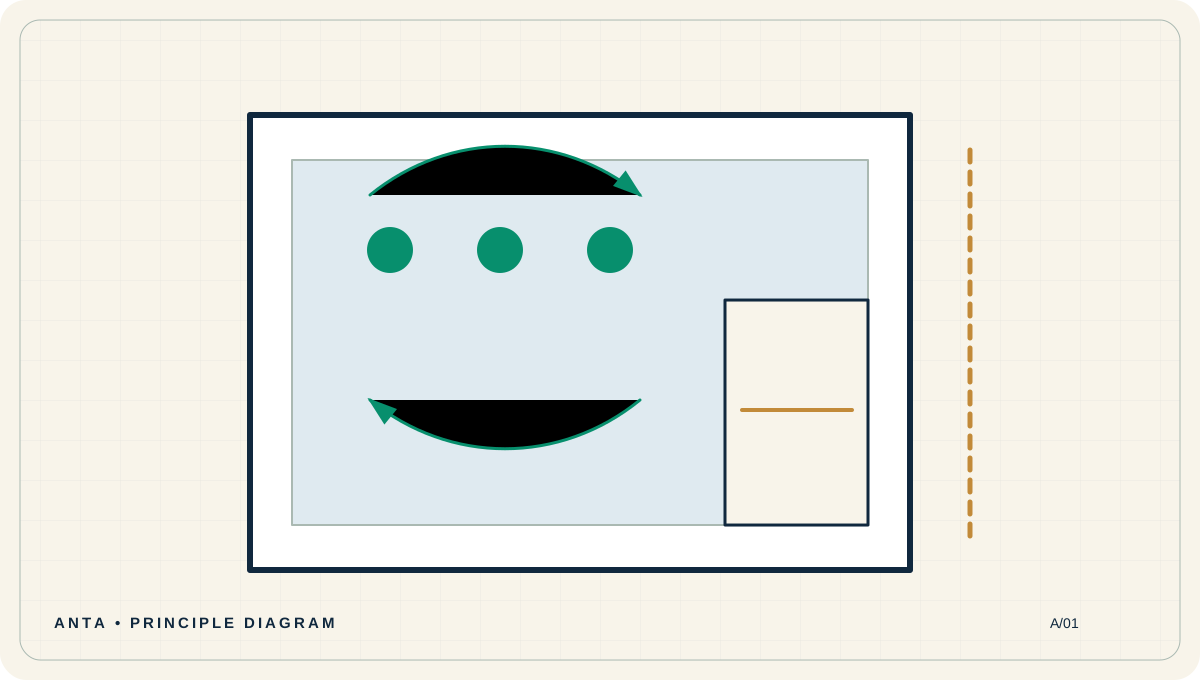
A/01
Design principle
Data • Interfaces • Evidence
Common situations
Signals that justify a study.
- 01Unstable temperatures and product losses
- 02Cold rooms with excessive consumption
- 03Capacity selected without real product loads
- 04Air, defrost and door management problems
- 05No continuity or monitoring strategy
Scope of services
Assignments proportionate to the real need.
Commercial, industrial and food refrigeration
Cold-chain continuity and temperature monitoring
Heat recovery and energy optimisation
Audits, refurbishment and compliance support
Maintenance and operating strategies
ANTA technical resource
See the system, not only the equipment.
Refrigeration protects a product over time. Design links temperature, humidity, cooling rate, logistics, envelope, plant, backup and operating discipline.
!
Diagrams explain a principle. Any application requires analysis of the site, use, climate, local rules and operating conditions.
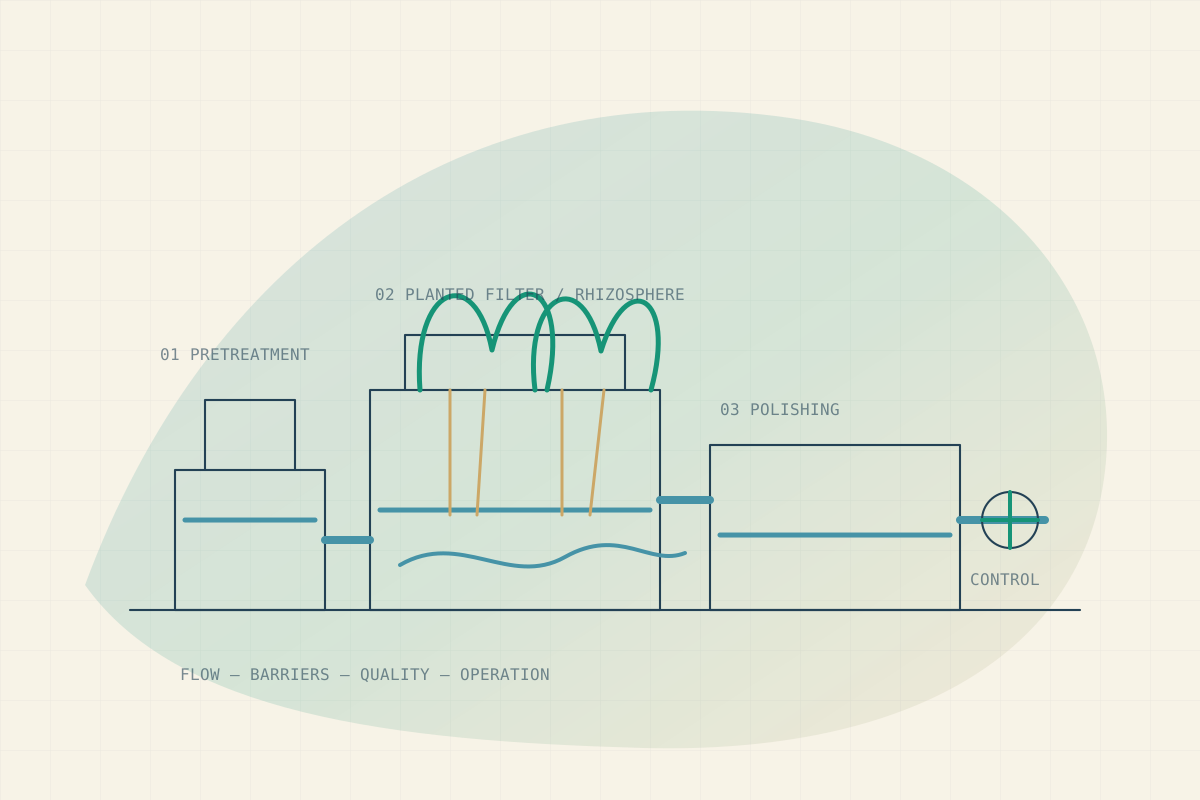
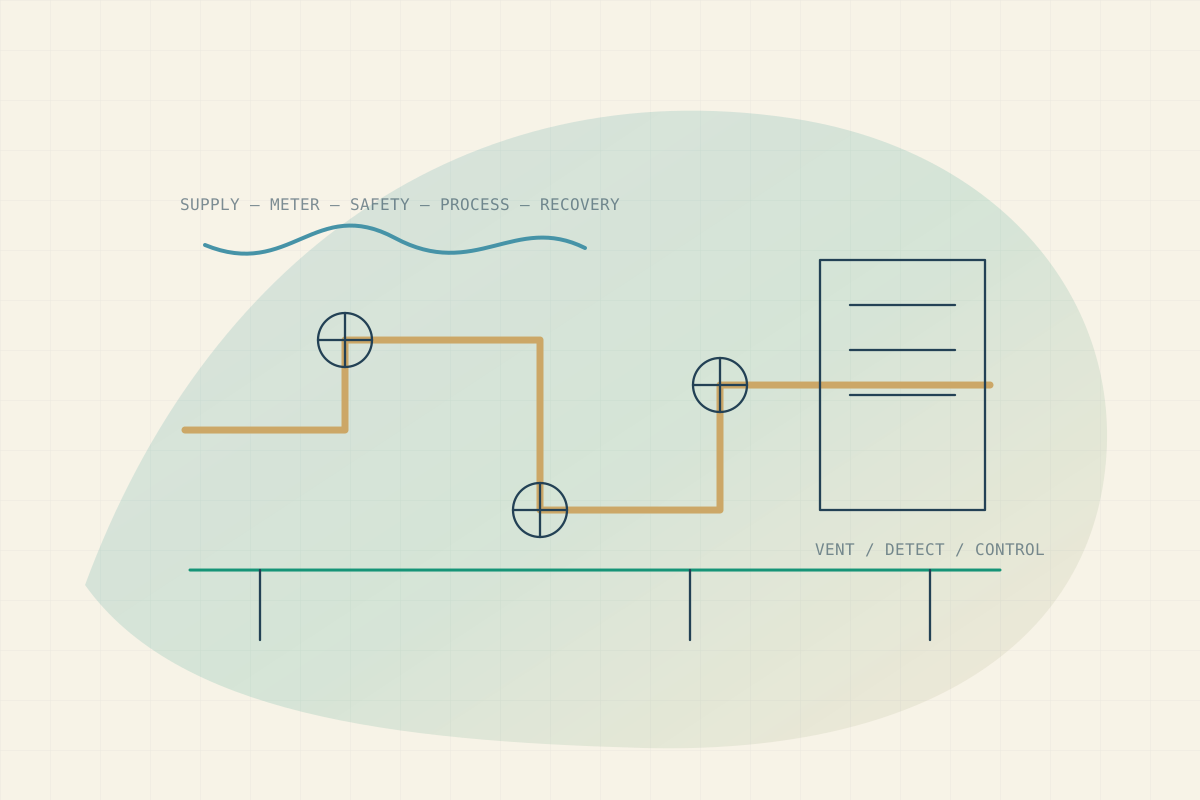
A/01Principle diagram — project-specific adaptation required
Understand how it works
From principle to technical decision.
Each stage shows what engineering must observe, calculate, coordinate or verify.
Define product and process
Product type, quantity, entry temperature, loading rate, storage duration and sensitivity determine the load.
Map heat gains
Walls, floor, doors, infiltration, lighting, people, fans, defrost and incoming products add heat.
Design envelope and flows
Insulation, vapour barrier, thermal bridges, doors, airlocks, pallet movement and hygiene must be coherent.
Select refrigeration plant
Evaporating and condensing temperatures, redundancy, refrigerant, heat recovery, control and ambient conditions affect performance.
Protect operations
Alarms, temperature records, maintenance, critical spares, outage procedures and backup protect the stock.
Design principles
What truly changes project quality.
Product before plant
A cold room is sized for product flow and service, not only geometric volume.
Doors
Every opening admits warm moist air, frost and additional load.
Condensation
Discontinuous vapour control can damage insulation and structure.
Continuity
Backup should reflect product inertia, allowable duration and repair time.
Decision support
The right questions before selecting.
These answers provide direction. They do not replace surveys, sizing or site validation.
Why no longer reach set temperature?
Check product load, door opening, frost, heat exchangers, airflow, refrigerant, controls, outdoor conditions and envelope.
Why has consumption risen?
Fouling, high condensing pressure, doors, seals, frost, setpoints, higher load or insulation damage may contribute.
Should plant be oversized for safety?
Oversizing can cause short cycling, poor control and unnecessary cost. Robustness comes from sound assumptions, modulation and appropriate redundancy.
Learning caseIllustration — not a client reference
Learning case — fruit and vegetable platform
Warm products arrive, doors remain open and temperature varies widely.
- Quantify product heat per hour
- Separate receiving, precooling and storage
- Reorganise doors and circulation
- Match control and capacity to sequences
- Monitor product and air temperature
Performance depends on logistics as much as on the refrigeration machine.
Frequently asked questions
Clear answers without oversimplifying.
01Are air and product temperatures the same?
Not necessarily. Air changes quickly; core product temperature often governs preservation.
02What is defrost for?
To remove frost that blocks airflow and heat transfer while limiting added heat and energy.
03Why insulate the floor?
To limit heat gain and, at low temperature, prevent condensation or ground freezing.
04Is an alarm enough?
It needs reliable transmission, a procedure, a named responder and an intervention target.
05Can rejected heat be recovered?
Often, for hot water or preheating, after checking temperatures and simultaneous demand.
Essential glossary
Use the right words for the right decisions.
- Refrigeration load
- Total heat that must be removed.
- Evaporation
- Stage where refrigerant absorbs heat at low temperature.
- Condensation
- Stage where refrigerant rejects heat.
- Vapour barrier
- Layer limiting vapour migration into cold insulation.
- Precooling
- Rapid reduction of product temperature before storage.
Further reading
Institutional and technical sources.
ANTA content is an original synthesis. These references support verification and further study.
Assignment method
From observation to performance evidence.
Every stage produces a decision, document or control useful to the next.
Define products and cycles
Establish the refrigeration load
Assess building, climate and logistics
Compare architectures and refrigerants
Design air distribution, defrost and control
Specify monitoring and redundancy
Test under representative load
Deliverables
Documents designed to decide, procure, control and operate.
The deliverable organises assumptions, interfaces, responsibilities and evidence.
Refrigeration load and assumptions
Product-flow and layout drawings
Equipment and control specifications
Energy and recovery analysis
Monitoring and alarm plan
Testing and commissioning procedure
Operating and maintenance file
ANTA perspective
A clear technical position.
Sound sizing considers the actual product, arrival temperature, heat to remove, door openings, humidity, climate and operating practices.
Interfaces
No lasting performance is designed in isolation.
Disciplines are connected to control transfers of load, energy, water, air, data and responsibility.
Turn a subject into a project