
10Engineering & Infrastructure
Treat, reuse and protect water according to its intended use.
ANTA studies water and wastewater systems from flows, pollutant loads, variability, footprint, quality objectives, health requirements and operating capacity.
A/01
Design principle
Data • Interfaces • Evidence
Common situations
Signals that justify a study.
- 01Discharge not compliant or poorly characterised
- 02Potable water used for non-potable duties
- 03Treatment chosen without reliable analysis
- 04Nature-based systems undersized or poorly maintained
- 05Confusion between treated, reusable and potable water
Scope of services
Assignments proportionate to the real need.
Greywater treatment and reuse
Biological, physical and physico-chemical processes
Nature-based treatment and planted filters
Reuse for irrigation, cleaning or technical uses
Stormwater, infiltration and storage
ANTA technical resource
See the system, not only the equipment.
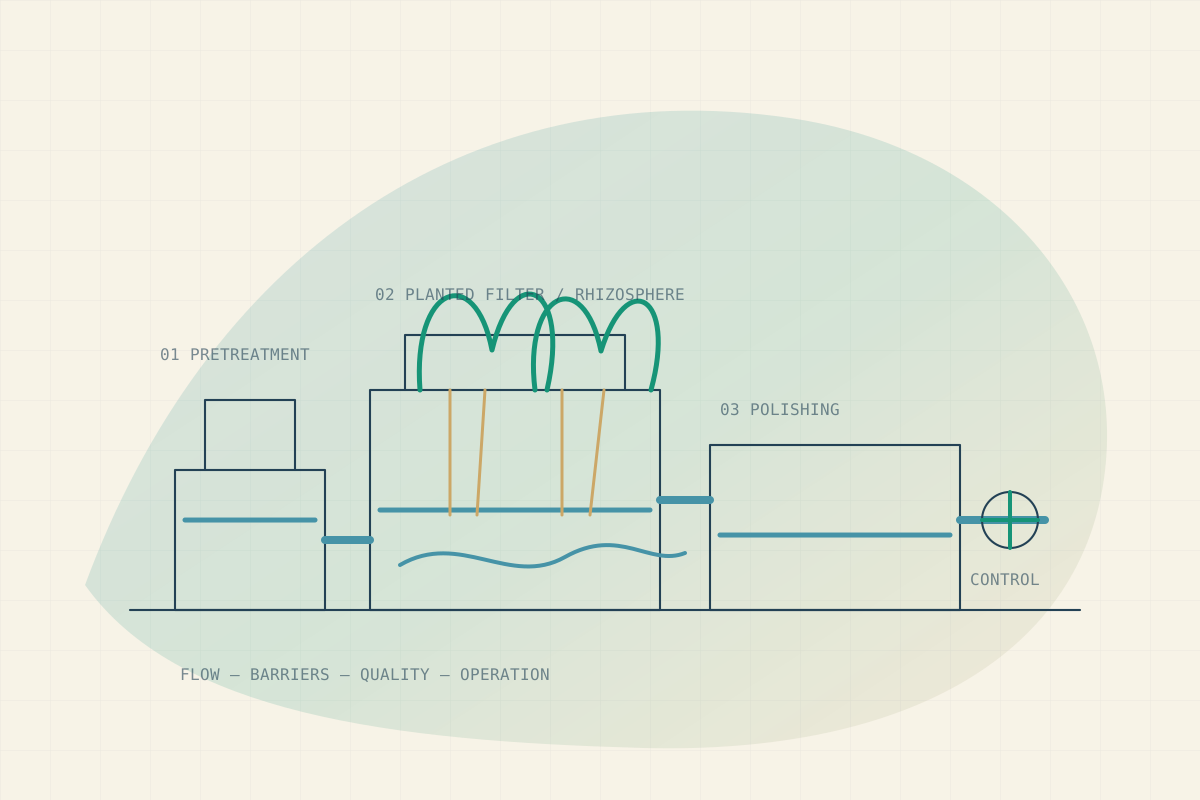
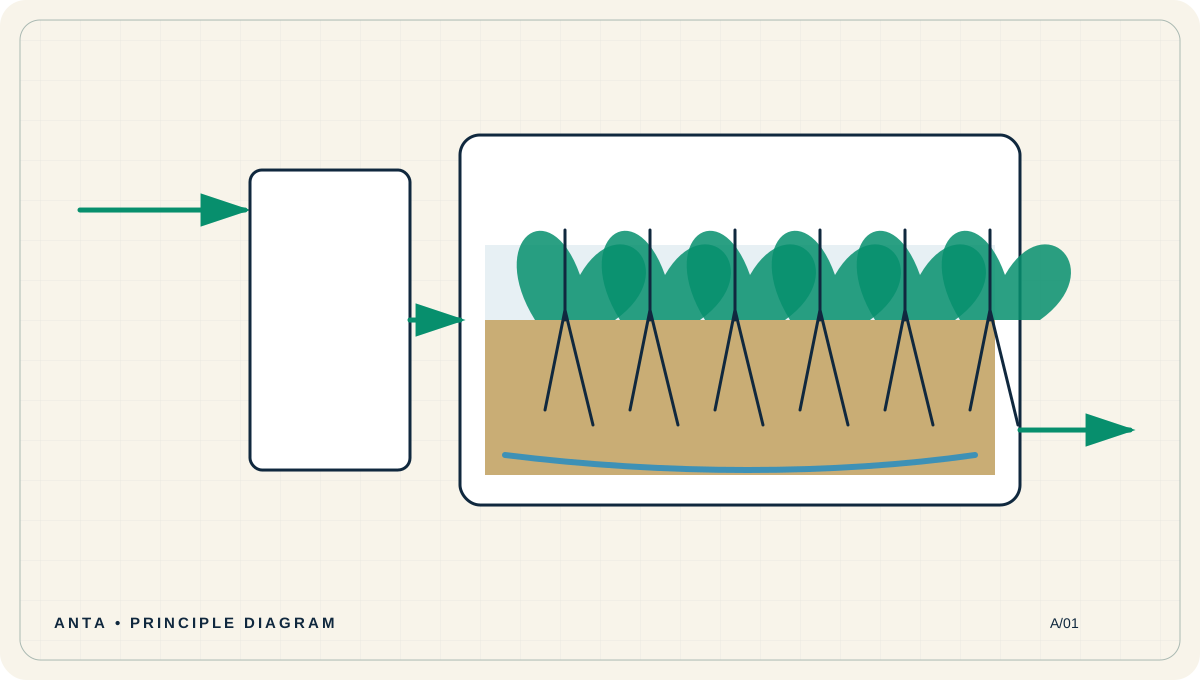
Water treatment is a sequence of barriers matched to source water and end use. Planted systems use filtration, media, oxygen, microorganisms and plants, but remain engineered assets requiring operation.
!
Diagrams explain a principle. Any application requires analysis of the site, use, climate, local rules and operating conditions.
A/01Principle diagram — project-specific adaptation required
Understand how it works
From principle to technical decision.
Each stage shows what engineering must observe, calculate, coordinate or verify.
Characterise the water
Source, average and peak flow, solids, organic load, nutrients, salts, pathogens and specific pollutants define the train.
Define the destination
Discharge, infiltration, irrigation, cleaning, process or potable use require different treatment and verification.
Assemble barriers
Pretreatment, settlement, planted or biological filters, fine filtration, disinfection and storage are combined according to risk.
Design hydraulics
Distribution, alternation, residence time, oxygenation, drainage, levels, overflows and bypasses must remain controlled.
Organise monitoring
Sampling, analysis, inspection, sludge, vegetation, clogging, equipment and ownership belong in the operating plan.
Design principles
What truly changes project quality.
Plants are not the whole process
Media, microorganisms, oxygen and hydraulics often do most of the treatment work.
Locally adapted species
Selection depends on climate, availability, tolerance and invasiveness.
Quality follows use
Clear water is not automatically safe for every use.
Maintenance matters
A poorly loaded or clogged nature-based system can lose performance quickly.
Decision support
The right questions before selecting.
These answers provide direction. They do not replace surveys, sizing or site validation.
Does planted treatment produce drinking water?
Not automatically. Potability requires specific barriers, analysis, regulation and sanitary control.
Which plants should be used?
Selection must be local: climate, available species, tolerance, roots, maintenance and invasiveness. A list from another country should not be copied blindly.
Can it work without energy?
Some layouts are gravity-driven and low-energy, while pumping, dosing or disinfection may still be needed.
Learning caseIllustration — not a client reference
Learning case — wastewater from a small facility
The site wants treatment and partial reuse for irrigation.
- Measure flows and load
- Separate compatible streams and special discharges
- Define pretreatment and planted filters
- Provide protected storage and suitable irrigation
- Set analyses, restrictions and maintenance
Reuse is designed from risk and end use, not only from the visual appearance of treated water.
Frequently asked questions
Clear answers without oversimplifying.
01How much land is needed?
It depends on flow, load, climate, filter type, treatment target, alternation and soil conditions.
02Will it smell?
Sound design limits unwanted anaerobic conditions, but pretreatment and sludge still need management.
03What happens to sludge?
It accumulates in defined units and must be removed, characterised and managed.
04Can treated water infiltrate on site?
Only after assessing soil, groundwater, distances, risk and local rules.
05How is performance verified?
Through hydraulic checks, observations, maintenance and analyses linked to objectives.
Essential glossary
Use the right words for the right decisions.
- BOD
- Indicator of biodegradable organic matter consuming oxygen.
- Suspended solids
- Particles carried in water.
- Clogging
- Loss of infiltration or flow capacity.
- Barrier
- A step reducing a contaminant or risk.
- Reuse
- Planned use of treated water under defined quality and control conditions.
Further reading
Institutional and technical sources.
ANTA content is an original synthesis. These references support verification and further study.
Assignment method
From observation to performance evidence.
Every stage produces a decision, document or control useful to the next.
Characterise water and load variability
Define required quality for the end use
Compare nature-based, compact and combined trains
Assess energy, footprint, sludge, reagents and maintenance
Design pretreatment, treatment, polishing and disinfection
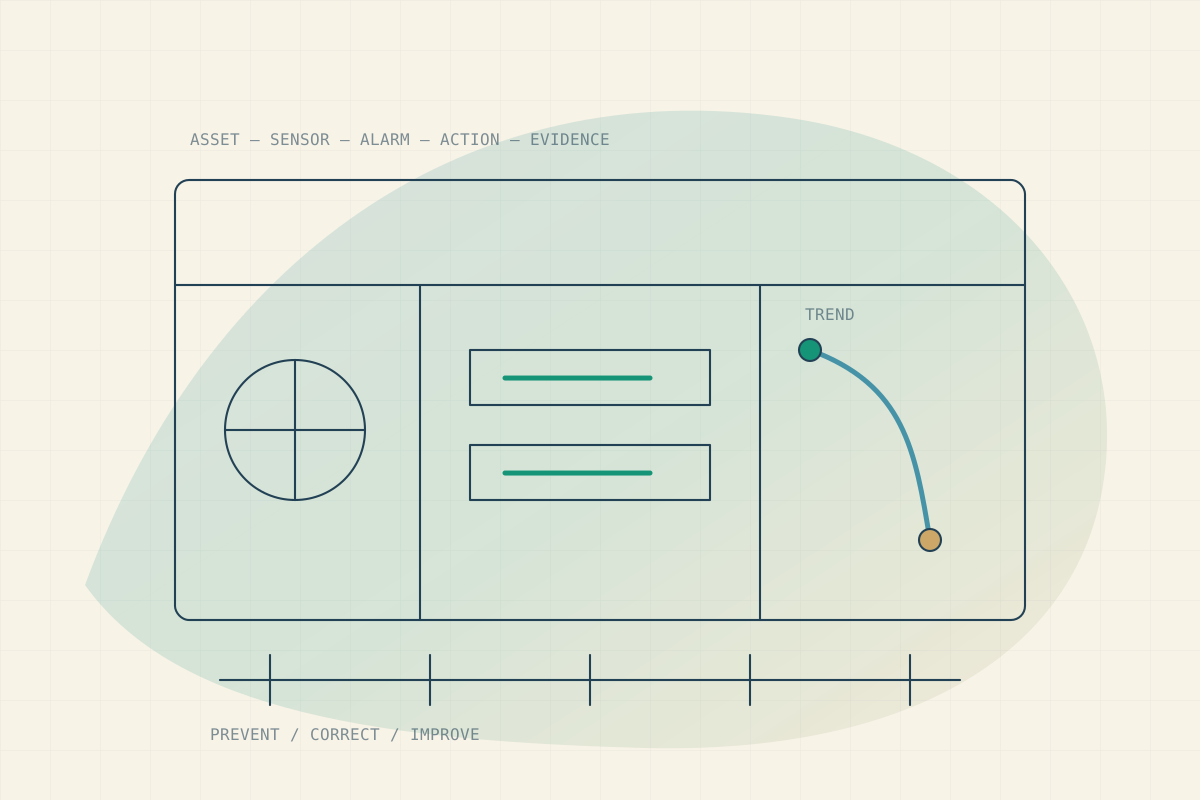
Define monitoring and deviation management
Train operators and secure continuity
Deliverables
Documents designed to decide, procure, control and operate.
The deliverable organises assumptions, interfaces, responsibilities and evidence.
Sampling programme and hydraulic balance
Process comparison and flow diagram
Concept sizing and layout
Water and sludge routing plan
Health protection and control requirements
Operating and maintenance plan
Water-quality monitoring protocol
ANTA perspective
A clear technical position.
Reuse depends on influent quality, final use and a verifiable chain of barriers. Potable reuse requires a dedicated study and health framework.
Interfaces
No lasting performance is designed in isolation.
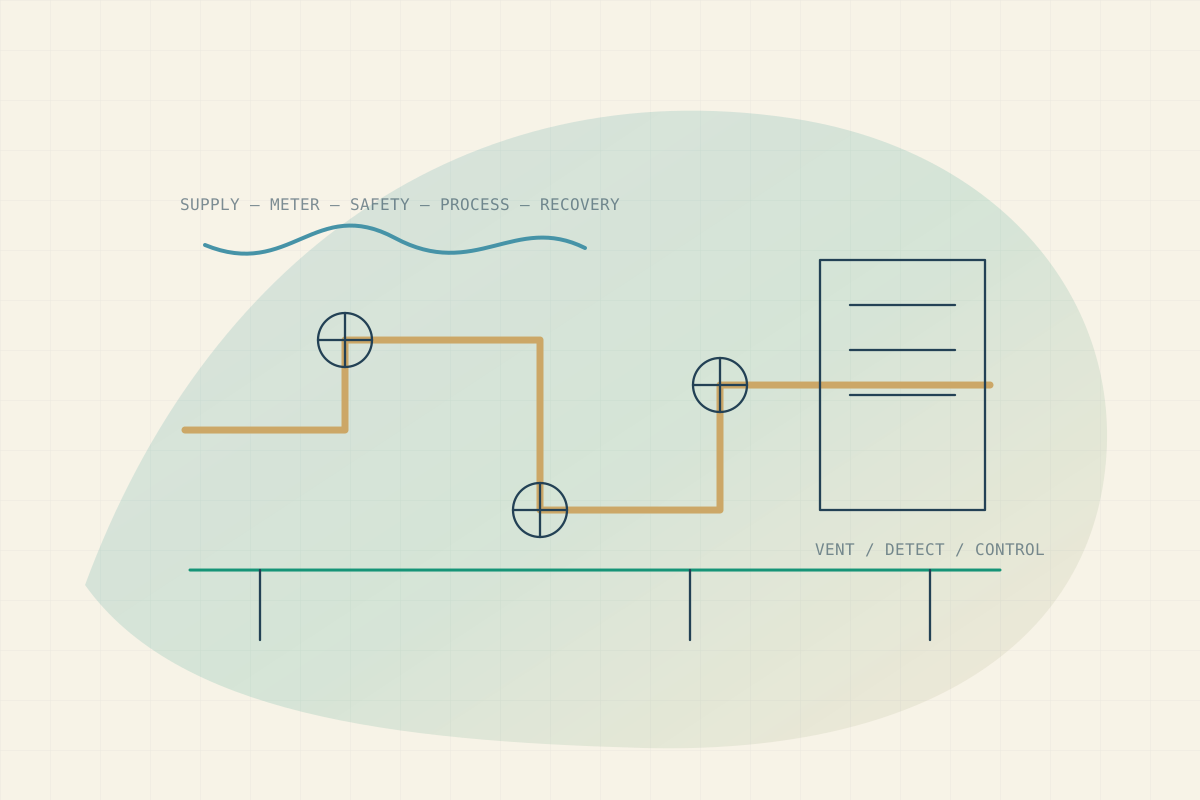
Disciplines are connected to control transfers of load, energy, water, air, data and responsibility.
Turn a subject into a project