
11Engineering & Infrastructure
Integrate gas within a safe, efficient and adaptable energy strategy.
Natural gas is not renewable. ANTA considers it as an energy or transition option only where context, use and safety justify it.
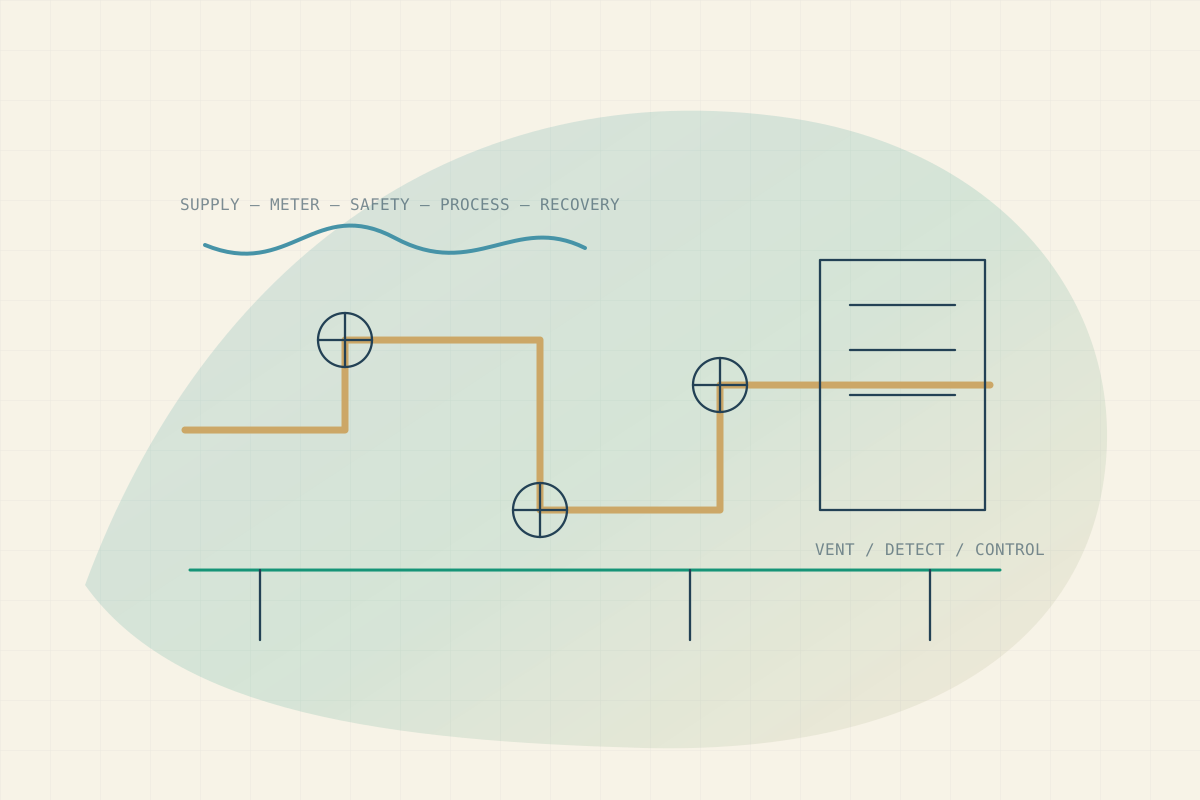
A/01
Design principle
Data • Interfaces • Evidence
Common situations
Signals that justify a study.
- 01Conversion considered without a whole-energy assessment
- 02Networks poorly documented or hard to maintain
- 03Safety risks insufficiently analysed
- 04Real efficiencies below nominal values
- 05Fossil use disconnected from the decarbonisation pathway
Scope of services
Assignments proportionate to the real need.
Conversion and modernisation
Heat production and processes
Hybrid solutions with recovery or renewables
Metering, controls and efficiency optimisation
Safety, ventilation, detection and operating procedures
ANTA technical resource
See the system, not only the equipment.
Natural gas may serve selected heat or continuity needs, but it should be assessed as a transition carrier through safety, efficiency, availability, emissions, cost and future substitution.
!
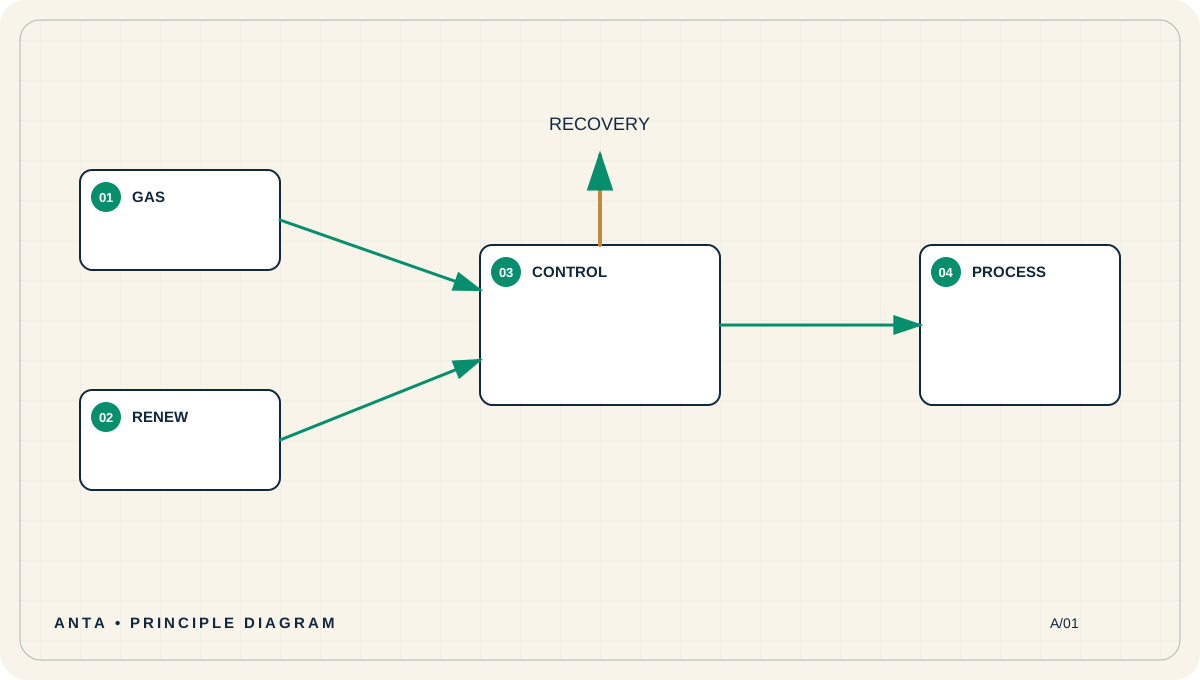
Diagrams explain a principle. Any application requires analysis of the site, use, climate, local rules and operating conditions.
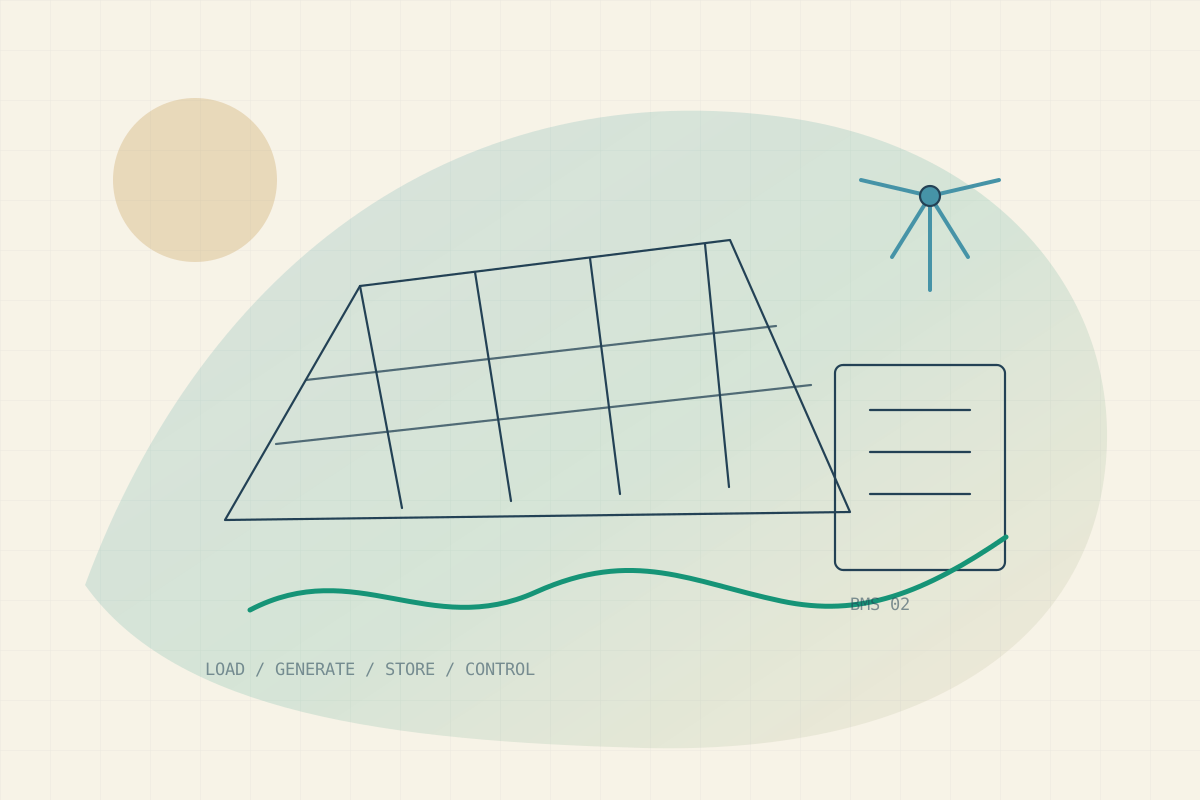
A/01Principle diagram — project-specific adaptation required
Understand how it works
From principle to technical decision.
Each stage shows what engineering must observe, calculate, coordinate or verify.
Define the heat use
Temperature, power, modulation, schedule, heat quality and continuity determine relevance.
Assess supply
Network, storage, pressure, quality, continuity and logistics shape architecture and risk.
Design safety
Detection, ventilation, shut-off, materials, location, combustion, flues and procedures must be coordinated.
Compare alternatives
Electricity, heat recovery, solar thermal, biomass and hybrid options are compared on whole-life cost and emissions.
Plan the pathway
Investment should remain coherent with price, regulation and decarbonisation objectives.
Design principles
What truly changes project quality.
Not renewable
Fossil natural gas emits carbon and must not be labelled renewable.
System efficiency
Appliance efficiency alone ignores distribution, losses, part-load and maintenance.
Active and passive safety
Design, detection, ventilation, procedures and competence reinforce one another.
Hybrid operation
Several sources can be controlled according to temperature, availability and cost.
Decision support
The right questions before selecting.
These answers provide direction. They do not replace surveys, sizing or site validation.
Is gas always cheaper?
No. Local price, efficiency, standing charges, investment, maintenance and future change all matter.
Can gas serve steam or refrigeration?
Potentially, but architectures, temperatures, efficiencies and safety constraints must be compared.
How is decarbonisation included?
Reduce demand, recover heat, compare carriers and prepare future equipment transitions.
Learning caseIllustration — not a client reference
Learning case — process heat demand
An agri-food unit needs stable process heat and hot water.
- Map temperatures and schedules
- Find heat-recovery potential
- Compare electricity, gas, solar thermal and hybrids
- Assess safety and availability
- Plan metering and reduction pathway
The carrier choice becomes a long-term system decision rather than a snapshot fuel-price comparison.
Frequently asked questions
Clear answers without oversimplifying.
01What is a modulating burner?
A burner that adjusts output to demand instead of simple on/off operation.
02Why analyse combustion air?
Poor combustion reduces efficiency and may increase emissions or risk.
03Is biogas the same as natural gas?
No. Composition, cleaning, calorific value, impurities and equipment may differ.
04Can flue heat be recovered?
Sometimes, depending on temperature, condensation, corrosion and compatible demand.
05What belongs in a safety plan?
Detection, ventilation, isolation, access, signage, testing, maintenance, training and alarm response.
Essential glossary
Use the right words for the right decisions.
- Calorific value
- Energy released by combustion of a quantity of fuel.
- Modulation
- Continuous or staged adjustment of output.
- Condensing
- Recovery of part of the water-vapour heat in flue gases.
- Biogas
- Gas produced by biological decomposition of organic matter.
- Hybrid system
- Controlled combination of several energy sources.
Further reading
Institutional and technical sources.
ANTA content is an original synthesis. These references support verification and further study.
Assignment method
From observation to performance evidence.
Every stage produces a decision, document or control useful to the next.
Define use and alternatives
Establish power and consumption balances
Assess supply, pressure and network constraints
Define safety, ventilation and detection
Compare whole-life cost and emissions
Preserve future adaptability
Test, document and train
Deliverables
Documents designed to decide, procure, control and operate.
The deliverable organises assumptions, interfaces, responsibilities and evidence.
Energy balance and scenarios
Supply and distribution functional diagram
Safety and ventilation note
Metering and control specifications
Economic and environmental analysis
Testing and emergency procedures
Operating file
ANTA perspective
A clear technical position.
A transition solution is relevant only where it genuinely improves efficiency, safety and the overall project pathway.
Interfaces
No lasting performance is designed in isolation.
Disciplines are connected to control transfers of load, energy, water, air, data and responsibility.
Turn a subject into a project