Power: “how fast?”
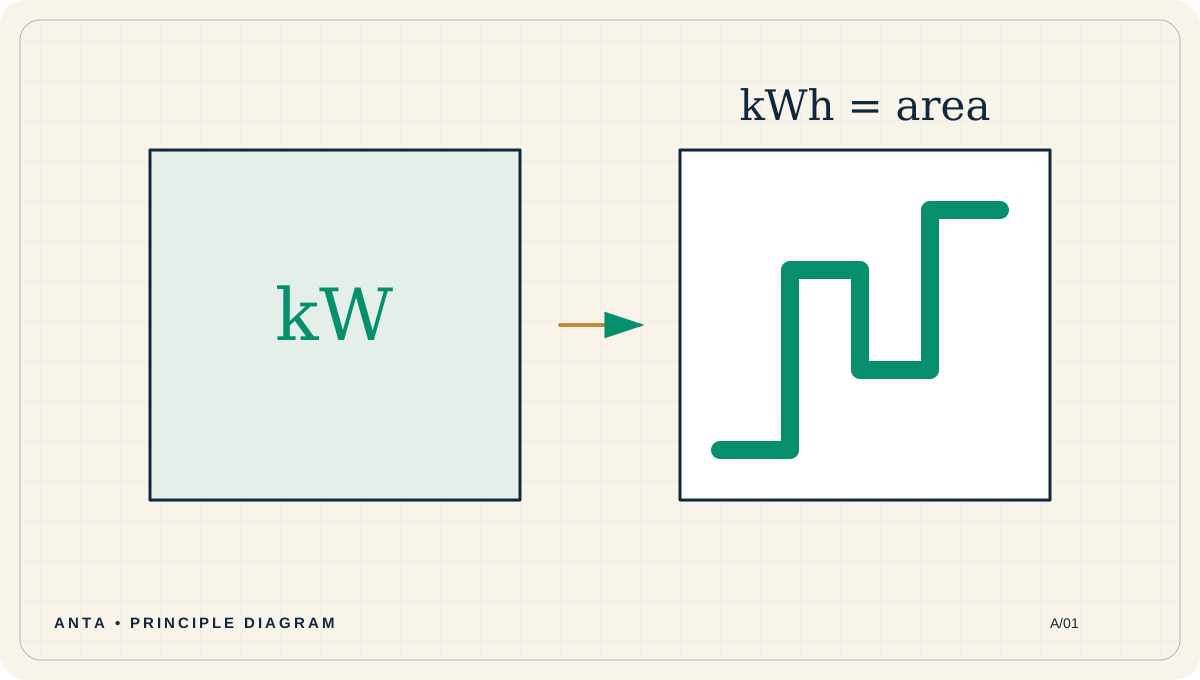
Kilowatts measure instantaneous power: the capacity or demand of a motor, air conditioner, generator, inverter or PV array.

This resource explains the principle, key decisions, common mistakes and the data required to go further.

Fundamentals
Power describes the instantaneous rate at which equipment uses or supplies energy. Energy accumulates that power over time.
Guided reading
Kilowatts measure instantaneous power: the capacity or demand of a motor, air conditioner, generator, inverter or PV array.
Kilowatt-hours measure accumulated quantity. They depend on average power and operating time.
Several items starting together can create a high peak even when daily energy remains moderate.
Power affects equipment, protection and network; energy affects bills, autonomy and storage capacity.
Prepare a study
The visitor can begin with these items. ANTA will then determine which measurements and checks are really required.
Frequently asked questions
No. 500 W is reference power; daily energy depends on irradiance, temperature, losses and time.
kWh states stored energy; kW states the power that can be delivered or absorbed.
Depending on the contract it may include subscribed or measured demand as well as kWh.
Essential glossary
Further reading
ANTA content is an original synthesis. These references support verification and further study.
Turn a subject into a project