Skip to content
ANTAEngineering & Infrastructure
Understand gains through the envelope, doors, products, air and operations.
This resource explains the principle, key decisions, common mistakes and the data required to go further.

A/01
Design principle
Data • Interfaces • Evidence
Refrigeration
Key points to retain.
A cold room continuously receives heat. Plant must remove it, but envelope, doors, products and operations often determine most of the performance.
- Incoming product can be the largest refrigeration load.
- Warm humid air through a door creates both load and frost.
- Air temperature alone does not reveal product core temperature.
A/01Principle diagram — project-specific adaptation required
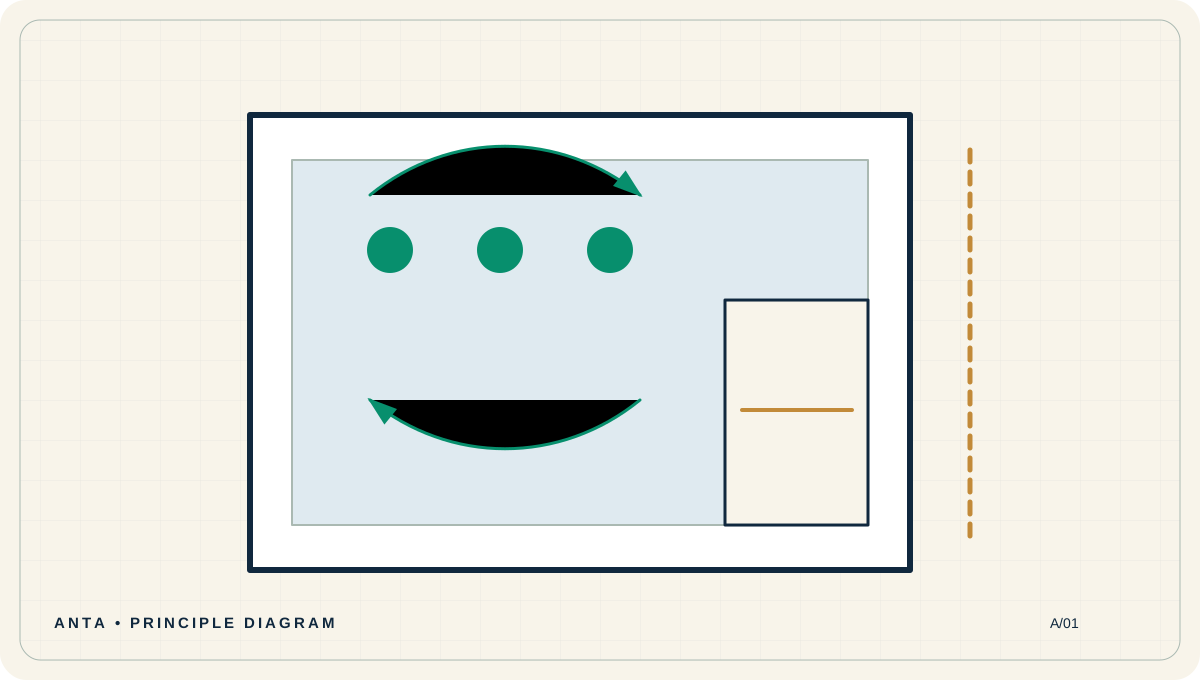 Where does a cold room lose energy?
Guided reading
Understand the mechanism, then its consequences.
01Walls and floor
Heat crosses surfaces according to insulation, bridges, moisture and temperature difference.
02Air exchange
Doors, seals and penetrations admit warm air and water vapour.
03Products and packaging
Mass, entry temperature and loading rate set the heat to be removed.
04Equipment and operation
Fans, lighting, defrost, people, setpoints and maintenance add load.
Prepare a study
Useful data before reaching a conclusion.
The visitor can begin with these items. ANTA will then determine which measurements and checks are really required.
- Product, tonnage and turnover
- Entry and storage temperatures
- Door duration and frequency
- Seal and panel condition
- Alarms and energy history
Frequently asked questions
Clear answers without oversimplifying.
01Why is frost forming?
Moisture ingress, door faults, insufficient defrost or airflow may contribute.
02Can the room be switched off at night?
That depends on product, thermal inertia, allowable temperature and risk; no universal answer is safe.
03Why does the compressor run continuously?
High load, dirty heat exchangers, low refrigerant charge, setpoint, doors or envelope may be involved.
Essential glossary
Use the right words for the right decisions.
- Product load
- Heat removed from incoming products.
- Infiltration
- Uncontrolled entry of air.
- Defrost
- Periodic removal of frost.
- Core temperature
- Internal product temperature.
Further reading
Institutional and technical sources.
ANTA content is an original synthesis. These references support verification and further study.
- ADEME — Industrial refrigeration↗
Turn a subject into a project
Share the available data. We will structure the next step.
Project brief