Skip to content
ANTA Engineering & Infrastructure
Move from the impression of wind to a measured resource and credible output. This resource explains the principle, key decisions, common mistakes and the data required to go further.
A/01
Design principle
Data • Interfaces • Evidence
Wind
Key points to retain. A place that “feels windy” is not yet a wind resource. Speed, direction, turbulence and their distribution with height require measurement or careful modelling.
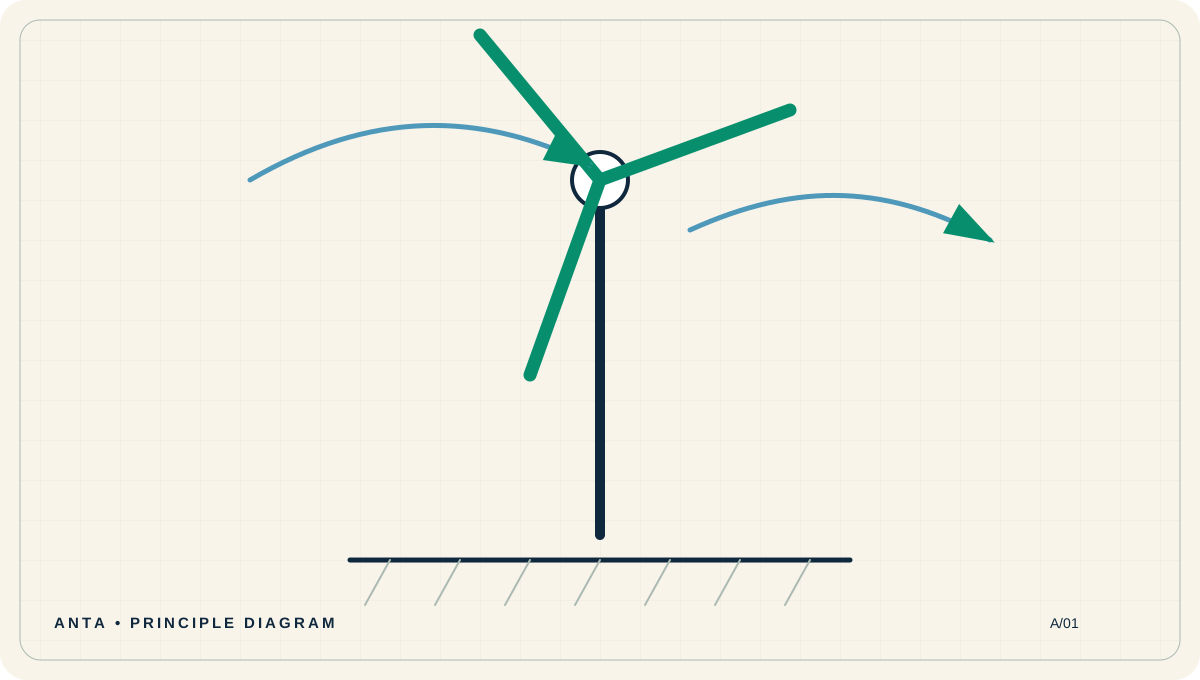
Available wind energy varies approximately with the cube of wind speed. Obstacles and turbulence can reduce both output and equipment life. An annual average alone does not describe operation. A/01 Principle diagram — project-specific adaptation required
Understand a wind project Guided reading
Understand the mechanism, then its consequences. 01 Measure resource Anemometer, height, duration, data quality and correlation with a reference station.
02 Read the site Topography, buildings, vegetation, roughness, corridors and extreme winds.
03 Select turbine Power curve, hub height, control, noise, loads, maintenance and grid.
04 Estimate output Combine wind distribution with availability, electrical and environmental losses.
Prepare a study
Useful data before reaching a conclusion. The visitor can begin with these items. ANTA will then determine which measurements and checks are really required.
Coordinates and altitude Obstacles and distances Available wind data Loads and grid Access, maintenance and acceptance Frequently asked questions
Clear answers without oversimplifying. 01 Will a small rooftop turbine work?Urban roofs may be highly turbulent. Site study, height and airflow matter.
02 Why can nearby sites differ?Topography, roughness, obstacles and exposure change local wind.
03 Are solar and wind complementary?Sometimes, but hourly and seasonal data must demonstrate it.
Essential glossary
Use the right words for the right decisions.
Anemometer Wind-speed sensor.
Wind rose Distribution of direction and speed.
Turbulence Rapid variation in speed and direction.
Power curve Turbine output according to wind speed. Further reading
Institutional and technical sources. ANTA content is an original synthesis. These references support verification and further study.
ADEME — Wind energy↗ Turn a subject into a project
Share the available data. We will structure the next step. Prepare initial scoping
+ My project A Anta Your project assistant
Project brief
Anta provides commercial guidance and prepares an initial document review. Studies, prices, schedules and commitments remain subject to human approval. Data and limitations .