Skip to content
ANTAEngineering & Infrastructure
Reduce heat gains before increasing cooling capacity.
This resource explains the principle, key decisions, common mistakes and the data required to go further.

A/01
Design principle
Data • Interfaces • Evidence
Building
Key points to retain.
Before producing cooling, the building can prevent part of the heat gain. Summer comfort depends on sun, surfaces, air, humidity and internal uses.
- Roof and exposed glazing may dominate gains.
- Internal blinds act after part of the radiation has entered.
- Cooling capacity should be reassessed after major passive measures.
A/01Principle diagram — project-specific adaptation required
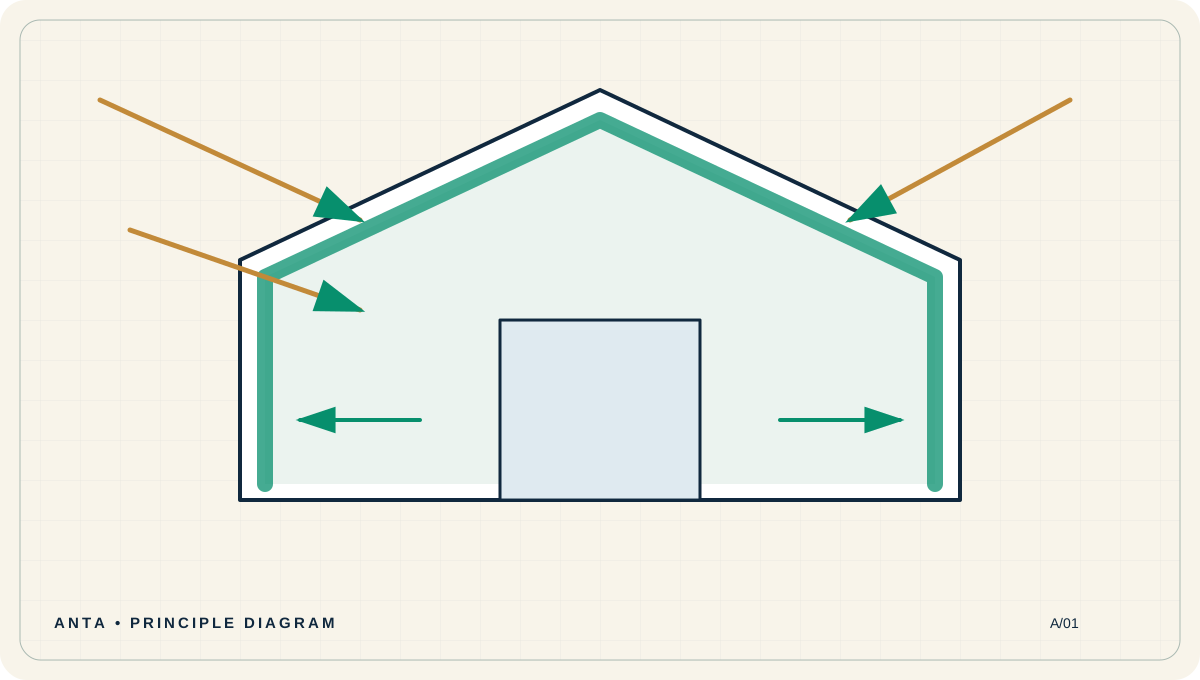 Summer comfort and the building envelope
Guided reading
Understand the mechanism, then its consequences.
01Control sunlight
Overhangs, external blinds, vegetation or orientation-specific shading reduce radiation.
02Limit transfer
Insulation, reflectance, cavities, continuity and bridge treatment affect surfaces.
03Manage air
Natural or mechanical ventilation, controlled infiltration and night strategies depend on climate.
04Reduce internal gains
Lighting, equipment and occupancy also release heat.
Prepare a study
Useful data before reaching a conclusion.
The visitor can begin with these items. ANTA will then determine which measurements and checks are really required.
- Façade orientation
- Roof and wall build-up
- Glazing area and type
- Occupancy schedule
- Measured temperature and humidity
Frequently asked questions
Clear answers without oversimplifying.
01Why focus on the roof?
It often has a large exposed area and receives intense radiation.
02Will a green façade cool the whole building?
It may provide local shade and evapotranspiration, but its contribution depends on design and does not replace whole-building analysis.
03Is night ventilation always useful?
Only when outdoor air is favourable and security, humidity and air quality are managed.
Essential glossary
Use the right words for the right decisions.
- Solar gain
- Heat resulting from received solar radiation.
- Time lag
- Delay in heat transmission through a construction.
- Operative temperature
- Combined effect of air and surface radiation.
- Solar shading
- Device reducing incoming radiation.
Further reading
Institutional and technical sources.
ANTA content is an original synthesis. These references support verification and further study.
- Cerema — Summer comfort↗
Turn a subject into a project
Share the available data. We will structure the next step.
Project brief