Skip to content
ANTAEngineering & Infrastructure
Connect source, machine, distribution, envelope and operating temperature.
This resource explains the principle, key decisions, common mistakes and the data required to go further.

A/01
Design principle
Data • Interfaces • Evidence
Climate systems
Key points to retain.
A heat pump moves heat between a source and an end use. Performance depends on temperature lift, distribution, climate, controls and the building.
- It transfers part of the heat from the environment rather than generating all output from electricity.
- A larger temperature difference generally reduces efficiency.
- High-rated equipment in an unsuitable building can disappoint.
A/01Principle diagram — project-specific adaptation required
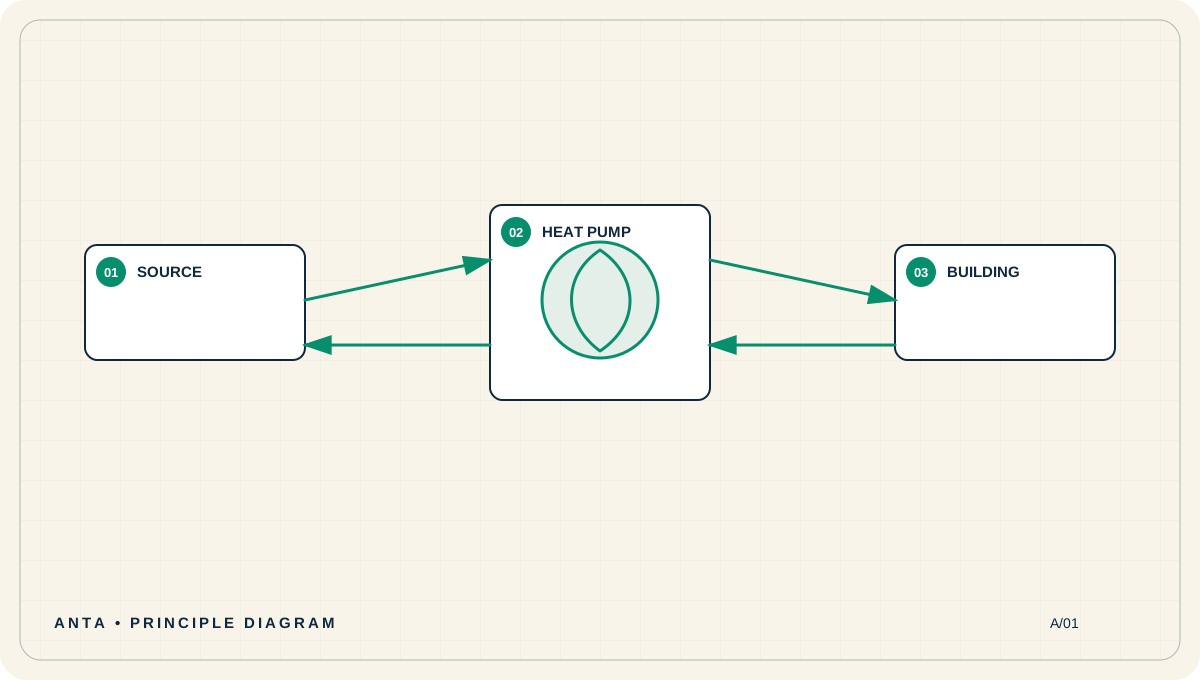 Understand a heat pump
Guided reading
Understand the mechanism, then its consequences.
01Source
Air, ground or water supplies or receives heat.
02Refrigeration cycle
Evaporator, compressor, condenser and expansion device circulate refrigerant.
03Emitters
Floor systems, fan coils, radiators or air distribution require compatible temperatures and flows.
04Controls
Weather compensation, setpoints, auxiliary heat, defrost and schedules affect comfort and energy.
Prepare a study
Useful data before reaching a conclusion.
The visitor can begin with these items. ANTA will then determine which measurements and checks are really required.
- Heating/cooling load and supply temperature
- Envelope condition
- Climate and humidity
- Existing emitters
- Electrical capacity and acoustics
Frequently asked questions
Clear answers without oversimplifying.
01Why can consumption rise in cold weather?
The source is colder, demand rises and defrost or auxiliary heat may operate.
02Can it cool?
Some systems are reversible, provided condensation and emitter compatibility are addressed.
03What is COP?
Ratio of heat delivered to electricity used under stated conditions, not a constant annual value.
Essential glossary
Use the right words for the right decisions.
- COP
- Coefficient of performance at defined conditions.
- SCOP
- Standardised seasonal performance.
- Defrost
- Cycle removing ice from the outdoor heat exchanger.
- Weather compensation
- Control of supply temperature according to outdoor conditions.
Further reading
Institutional and technical sources.
ANTA content is an original synthesis. These references support verification and further study.
- ADEME — Heat pumps↗
Turn a subject into a project
Share the available data. We will structure the next step.
Project brief